


Have you ever ordered a suit online, filled with anticipation, only to find it fits nothing like the polished photo on the website? You are not alone. Navigating the world of online suit shopping can feel like a gamble, but achieving that sharp, tailored look from the comfort of your home is entirely possible when you know what to avoid. A well-fitting suit is a cornerstone of a powerful wardrobe, projecting confidence and attention to detail.
The most frequent errors when purchasing a suit online include guessing your measurements, ignoring fabric details, getting the shoulder fit wrong, overlooking jacket length, and failing to budget for final alterations. By understanding these 5 common suit fitting mistakes to avoid when buying online, you can transform your digital shopping experience from a game of chance into a strategic success, ensuring your next suit purchase is your best one yet. This guide will walk you through each pitfall and provide expert insights for a flawless fit.
Why Nailing the Fit Is Crucial for Online Suit Purchases
The single most important element of any suit is the fit. It is the silent communicator of style, professionalism, and self-respect. An ill-fitting suit, no matter how expensive or well-made, can undermine your entire appearance, making you look unkempt or uncomfortable. When you buy in a physical store, a sales associate can guide you, but online, you become your own expert consultant. This makes understanding the principles of a great fit absolutely essential.

A perfectly fitted suit enhances your physique, broadens your shoulders, and trims your waistline, creating a powerful and flattering silhouette. It moves with you, providing comfort without being baggy or restrictive. This level of precision is what separates a truly premium garment from an average one. Investing the time to get the fit right is an investment in your personal brand and confidence, ensuring you make a memorable impression for all the right reasons.
Mistake 1: Guessing or Using Outdated Measurements
The foundation of a successful online suit purchase is accurate data. Many buyers make the critical error of guessing their size based on a different brand or using measurements that are months, or even years, old. Your body can change, and brand sizing is notoriously inconsistent across the fashion industry. Relying on old information or assumptions is the quickest path to a disappointing fit and a frustrating return process.
How to Take Accurate Body Measurements at Home
Taking your own measurements is simple and takes only a few minutes. All you need is a soft tailor’s measuring tape. For best results, wear close-fitting clothing and stand in a natural, relaxed posture. It can be helpful to have a friend assist you to ensure the tape is level, especially for measurements on your back.
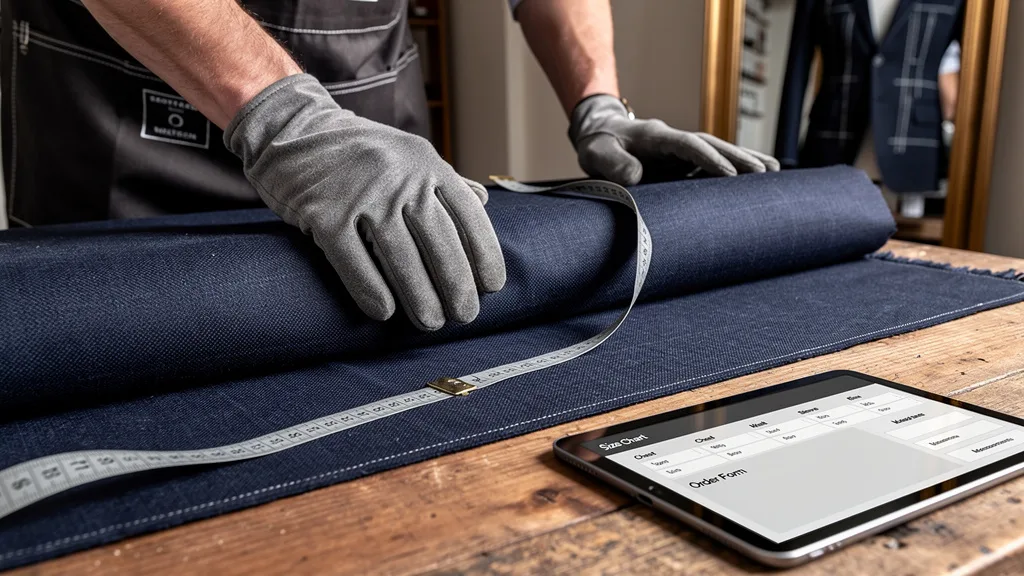
Here are the essential measurements you will need:
- Chest: Wrap the tape around the fullest part of your chest, under your armpits, keeping the tape level across your back.
- Stomach/Waist: Measure around your natural waistline, typically just above your belly button. Don’t pull the tape too tight.
- Hips/Seat: Measure around the fullest part of your hips and buttocks.
- Shoulder Width: Measure from the end of one shoulder bone across your back to the end of the other.
- Sleeve Length: With your arm slightly bent, measure from the center of the back of your neck, across your shoulder, and down to your wrist bone.
- Inseam: Measure from the crotch of a well-fitting pair of trousers down to the desired hem length, usually at the top of your shoe.
Understanding Brand Sizing Charts and Variations
Once you have your accurate body measurements, the next step is to compare them against the specific sizing chart for the suit you wish to purchase. Never assume a “Large” or a “42R” is the same everywhere. Premium brands often provide detailed charts that map chest, waist, and even height recommendations to their sizes. Pay close attention to whether the measurements listed are for the body or the garment itself.
Look for fit descriptions like “slim fit,” “modern fit,” or “classic fit,” as these will significantly impact the suit’s silhouette. A slim fit suit will be much more tapered through the chest and waist than a classic fit. If your measurements fall between two sizes, reading customer reviews or contacting customer service can provide valuable guidance. For example, our XXXL size chart offers detailed specifications to help customers find their ideal fit across our diverse collections.
Mistake 2: Overlooking Fabric Weave and Construction
A suit’s appearance, drape, and comfort are determined by its fabric. Many online shoppers focus only on color and pattern, completely overlooking the material composition. The fabric’s weave, weight, and breathability affect not only how the suit feels but also its suitability for different climates and occasions. Ignoring these details can lead to owning a suit that is too hot, too stuffy, or wrinkles too easily for your needs.
Choosing the Right Material for Your Climate and Occasion
The right fabric choice ensures you remain comfortable and stylish. For year-round versatility, wool is the undisputed champion, offering breathability and wrinkle resistance. Look for terms like “Super 100s” or higher, which indicate a finer, softer wool. For warmer climates or summer events, linen, cotton, or lightweight wool blends are ideal as they are highly breathable. A woolen suit for women is perfect for cooler weather, providing warmth without bulk.
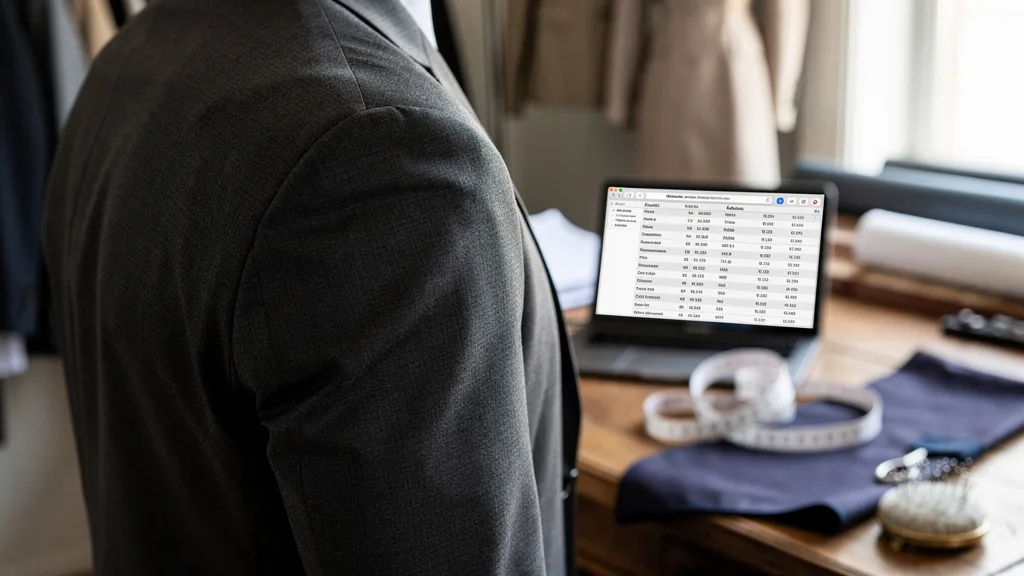
For more formal events, you might consider fabrics with a subtle sheen, like a wool-silk blend. Conversely, tweed or flannel suits offer a more textured, rustic look perfect for autumn and winter. Think about when and where you will wear the suit most often, and let that guide your material selection. This thoughtful approach is crucial for building a functional and versatile wardrobe.
Reading Product Descriptions for Quality Indicators
High-quality online retailers provide detailed product descriptions that offer clues about the suit’s construction. Go beyond the basic material and look for specifics. Does it mention the fabric weight (in grams per square meter, or gsm)? Is the jacket lined, and if so, with what material (Bemberg/cupro is a sign of quality)? Is the construction described as fused, half-canvassed, or full-canvassed?
A half-canvassed jacket, where a layer of canvas is stitched through the chest and lapels, offers superior shape and durability compared to a fused (glued) construction. These details, while small, are hallmarks of a well-made garment that will last longer and look better over time. Taking a moment to read the fine print helps you understand the true value of the suit you are considering.
Mistake 3: Disregarding the Importance of Shoulder Fit
Of all the elements of a suit, the shoulder fit is the most critical and the most difficult to alter. The shoulders act as the hanger for the entire jacket, and if they do not fit correctly, the rest of the garment will not drape properly. A common mistake is to focus on the chest or waist while ignoring tell-tale signs of a poor shoulder fit, such as pulling, bunching, or overhang.
Identifying a Perfect Shoulder Fit vs. a Poor One
A perfect shoulder fit is clean and seamless. The jacket’s shoulder seam should end precisely where your natural shoulder bone ends. When you stand with your arms at your sides, the fabric over the shoulder should lie flat and smooth, without any divots, wrinkles, or pulling. The sleeve should hang cleanly from the shoulder without any twisting or bunching at the top.
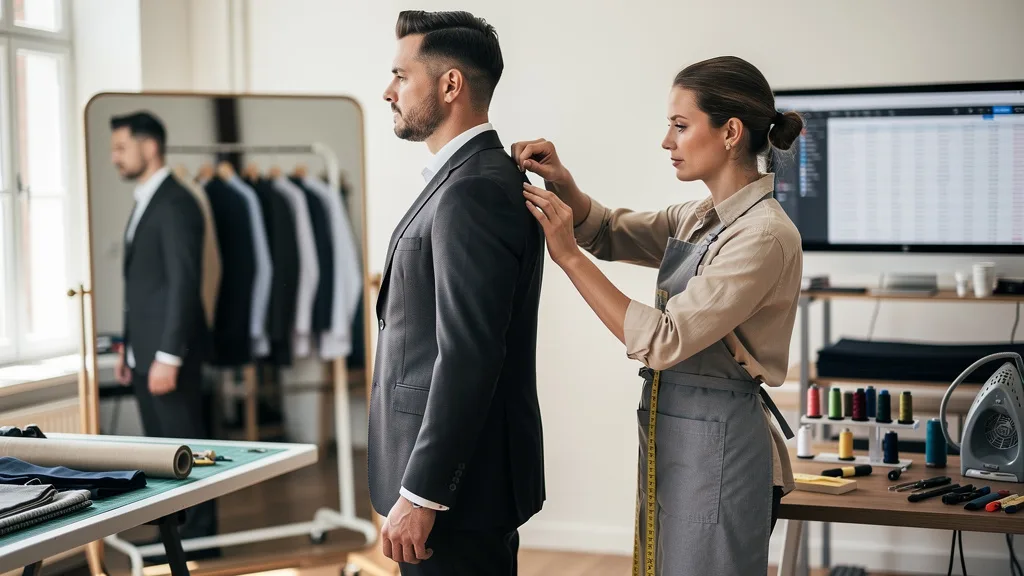
Conversely, a poor fit is easy to spot. If the seam extends past your shoulder bone, the jacket is too large, creating a sloppy, drooping effect. If the seam sits too high on your shoulder, the jacket is too small, causing a divot or pucker just below the seam and restricting movement. This is one of the most Common Menswear Mistakes & How to avoid them is by prioritizing this single point of fit. Understanding the difference between a natural shoulder and a drop shoulder vs regular fit in other garments can also train your eye.
The Limits of Tailoring for Bad Shoulder Construction
While a good tailor can work wonders, altering the shoulders of a suit jacket is one of the most complex, expensive, and risky procedures. It essentially requires deconstructing and reconstructing the top of the jacket. In most cases, the cost and effort are not worth it, and the result may still not be perfect. This is why you must prioritize getting the shoulders right from the start.
When buying a suit online, make the shoulder measurement your primary guide. It is far easier and more cost-effective to have a tailor take in the waist or adjust the sleeve length than it is to fix a poorly fitting shoulder. If the shoulders fit perfectly, almost any other minor issue can be resolved with simple alterations.
Mistake 4: Ignoring Jacket Length and Button Stance
Beyond the core fit, the proportions of the jacket itself play a huge role in creating a balanced and aesthetically pleasing look. Two often-overlooked details are the jacket’s overall length and the placement of its buttons, known as the button stance. Getting these wrong can throw off your entire silhouette, making you appear shorter, longer, or disproportionate. Common Menswear Mistakes & How.
Finding the Correct Jacket and Sleeve Length for Your Body
A classic rule of thumb for jacket length is that it should be long enough to cover the seat of your trousers. Another popular method is the “cupped fingers” test: with your arms relaxed at your sides, the bottom of the jacket should rest in the palms of your cupped fingers. For sleeve length, the goal is to show about a quarter to a half-inch of your shirt cuff. This creates a clean, deliberate break between the suit and your hand.
These are guidelines, not rigid laws. Modern trends sometimes favor slightly shorter jackets, but be cautious. A jacket that is too short can look like you’ve outgrown it, while one that is too long can make your legs appear shorter. Aim for a length that feels balanced and proportional to your torso and legs. For more formal wear, such as a tuxedo or dinner suit, adhering to classic lengths is always a safe and stylish bet.
How Button Placement Affects Proportions
The button stance refers to the vertical position of the top button on a two-button or three-button suit. This single point is the visual center of the jacket and creates the “V” shape of the lapels. An ideal button stance for a two-button suit places the top button just above your navel. This elongates the torso and creates a flattering, slimming effect.
A button stance that is too high can look dated and constricting, while one that is too low can drag the eye downward and make you appear shorter. When you fasten the button, there should be no pulling or straining in an “X” shape. The lapels should roll naturally to the button. Whether you’re choosing a casual suit or a formal one, paying attention to the button placement is a subtle detail that makes a major impact.
Mistake 5: Forgetting to Budget for Final Alterations
One of the biggest misconceptions about buying a suit online—or even off the rack in a store—is that it will fit perfectly right out of the box. The reality is that almost every suit will require some minor adjustments to achieve a truly bespoke look. Forgetting to factor in the time and cost of final tailoring is a common oversight that can lead to disappointment.
“A $500 suit with $100 in tailoring will always look better than a $1000 suit with no alterations. Budgeting for the final fit is non-negotiable for a sharp look and is one of the key things to know to avoid the 3 Mistakes Men Make While buying suits.”
Factoring in Potential Tailoring Costs
Before you even click “buy,” you should have a general idea of what basic alterations cost in your area. Set aside an additional 10-20% of the suit’s purchase price for tailoring. Common adjustments like hemming trousers, adjusting sleeve length, or taking in the jacket waist are typically affordable and make a world of difference. Research a reputable local tailor in advance so you are ready to go as soon as your suit arrives. specific sizing chart.
Think of tailoring not as an extra expense, but as the final step in the purchasing process. This small additional investment is what elevates a good suit to a great one. It customizes the garment to your unique body shape, ensuring maximum comfort and a flawless appearance. This final touch is what truly unlocks the value of your purchase.
Knowing What a Tailor Can and Cannot Fix
Understanding the limits of tailoring is just as important as budgeting for it. A good tailor can easily make some adjustments, while others are difficult or impossible. Knowing the difference helps you assess a suit’s potential when you first try it on.
| Easy & Common Fixes | Difficult & Expensive Fixes |
|---|---|
| Hemming trouser length | Adjusting shoulder width |
| Taking in or letting out the trouser waist | Changing the jacket length |
| Shortening or lengthening sleeves (if fabric allows) | Significantly altering the chest measurement |
| Tapering the trouser legs | Fixing a low armhole |
| Taking in the jacket’s side seams | Correcting the button stance |
This is why getting the core elements right—especially the shoulders and chest—is so crucial when you make the initial purchase. Prioritize a good fit in the areas that are difficult to change, and let your tailor handle the rest. This strategy ensures you can achieve a custom-quality fit without the custom-suit price tag.
Key Takeaways
Purchasing a suit online can be a highly successful and convenient experience when you approach it with the right knowledge. By avoiding these common pitfalls, you can shop with confidence and secure a garment that looks and feels like it was made for you. Remember these key points for your next online suit purchase in 2026:
- Measure, Don’t Guess: Always use fresh, accurate body measurements and compare them directly to the brand’s specific size chart.
- Prioritize Shoulder Fit: The shoulders are the most critical fit point and the hardest to alter. Ensure the shoulder seams align perfectly with your shoulder bones.
- Mind the Details: Pay attention to fabric composition, jacket length, and button stance, as these details significantly impact the suit’s overall look, comfort, and proportions.
- Budget for Tailoring: Treat alterations as the final, essential step of your purchase. A small investment in tailoring yields a massive return in fit and appearance.
- Know a Tailor’s Limits: Buy a suit that fits well in the hard-to-change areas (shoulders, chest, length) and rely on a tailor for the easy fixes (waist, sleeves, hem).
Frequently Asked Questions
What are the most common mistakes people make when dressing professionally?
The most common professional dressing mistakes often revolve around fit and maintenance. These include wearing clothes that are too large or too small, neglecting to iron or steam garments, choosing inappropriate footwear, and overlooking grooming details. A perfectly good outfit can be completely undermined by wrinkles or scuffed shoes, signaling a lack of attention to detail.
Another frequent error is mismatching levels of formality, such as pairing a formal suit jacket with very casual trousers or wearing sneakers with a business suit. Consistency in your attire’s formality creates a more cohesive and polished appearance. Finally, poor color combinations or overly loud patterns can be distracting in a professional setting.
What is the 5-suit rule for men?
The 5-suit rule is a classic wardrobe-building guideline designed to create a versatile and comprehensive suit collection for a professional. It suggests that a man should own five essential suits to be prepared for nearly any occasion. The core of this collection typically includes a solid navy suit and a solid charcoal grey suit, as these are the most versatile for business.
The collection is rounded out with a lighter grey suit for daytime or warmer weather, a suit with a subtle pattern like pinstripes or a check, and a fifth suit for specific occasions, such as a black suit for formal events, a tuxedo, or a seasonal option like a linen or tweed suit. This framework ensures you have appropriate options for interviews, daily work, weddings, and formal functions.
What is the 3-3-3 rule for men’s fashion?
The 3-3-3 rule is a minimalist wardrobe concept aimed at creating a versatile capsule wardrobe. The idea is to select three tops (e.g., shirts, sweaters), three bottoms (e.g., trousers, jeans), and three pairs of shoes that all coordinate with each other. This combination theoretically provides a wide range of different outfits from just nine core items.
This method encourages thoughtful purchasing and focuses on high-quality, versatile pieces rather than a large quantity of clothes. It’s an excellent strategy for travel, for those looking to simplify their style, or for anyone wanting to build a more sustainable and functional wardrobe. The key is ensuring every piece can be mixed and matched with the others.
How much should I budget for tailoring a suit I bought online?
A good rule of thumb is to budget an additional 10% to 20% of the suit’s purchase price for professional tailoring. For a moderately priced suit, this might mean setting aside anywhere from $50 to $150. Basic alterations like hemming trousers or adjusting sleeve length are typically on the lower end of that range.
More complex adjustments, such as taking in the jacket body or tapering trousers, will cost more. It’s always wise to get a quote from your tailor before committing to the work. This planned expense ensures your off-the-rack suit achieves a much more expensive, custom-fitted appearance.
Is it better to buy a suit slightly too large or too small?
It is almost always better to buy a suit that is slightly too large rather than one that is too small. A tailor has much more flexibility to remove excess fabric and take in seams to create a perfect fit. Letting a garment out is far more challenging, as there is often very little extra fabric available in the seams, especially in modern, slim-fit garments.
Specifically, you want to ensure the suit is not tight across the shoulders or chest, as these are the most difficult areas to expand. If you are between sizes, choosing the larger size gives you and your tailor the best chance of achieving a flawless, comfortable fit through alterations.
Conclusion
By learning to sidestep these five common fitting mistakes, you can master the art of buying suits online. The key is to shift your mindset from simply buying a size to strategically building a tailored look. Start with precise measurements, prioritize the non-negotiable fit of the shoulders, scrutinize fabric details, understand proportions, and embrace tailoring as the final, crucial step. This approach will replace uncertainty with confidence, ensuring every suit you purchase online is a worthy investment in your personal style.
Now that you’re equipped with the knowledge to find the perfect fit, it’s time to explore a collection crafted with precision and style in mind. Our premium suits are designed with attention to detail, from fabric quality to modern construction, providing the perfect canvas for your tailored look. Discover your next power suit today.
If you want help turning this into a concrete plan for your site or team, take the next step below to apply 5 Common Suit Fitting Mistakes to Avoid When Buying Online with confidence.
Ready to act on 5 Common Suit Fitting Mistakes to Avoid When Buying Online? SHOP NOW — tell us your goal, and we will help you pick the highest-leverage next step so you are not guessing alone.