

Struggling to find an XXXL suit that fits perfectly off the rack? Finding a suit that combines style, comfort, and a flattering silhouette can be a challenge, but understanding the measurements is the first step toward achieving a polished look. A well-fitting suit is essential for making a powerful impression, whether for business, a wedding, or a formal event.
An XXXL (or 3XL) suit is designed for a larger frame, typically corresponding to a chest measurement of 50-52 inches and a trouser waist of 44-46 inches. However, these numbers can vary between brands. This guide provides a comprehensive XXXL suit size chart for 2026, breaking down the key measurements for the chest, waist, and jacket to help you shop with confidence and find a suit that feels tailor-made.
Understanding the XXXL Suit Size Chart for 2026
Navigating suit sizes can be confusing, especially when shopping online. An XXXL suit size chart serves as a crucial tool, translating the general “3XL” label into specific body measurements. For 2026, most premium apparel brands have standardized their charts to a degree, but minor variations always exist. It is essential to treat each brand’s chart as a unique guide rather than assuming universal sizing.
The XXXL designation generally indicates a suit jacket with a chest size between 50 and 52 inches (127-132 cm). Trousers are typically sized with a “drop,” which is the difference between the chest and waist measurement. For an XXXL suit, this usually means a waist size of 44 to 46 inches. Understanding these core numbers is the key to decoding any size chart and selecting a garment that will require minimal alterations.
To ensure your suit fits impeccably, you need to pay close attention to three primary areas: the chest, the waist, and the jacket’s length. Each component plays a vital role in the overall structure and comfort of the suit. Getting these measurements right prevents common fit issues like pulling buttons, restricted movement, or an unbalanced silhouette.
The chest measurement is the most critical factor for a suit jacket. For a standard XXXL suit, this measurement typically falls in the 50-52 inch range. When you try on the jacket, it should button comfortably without pulling or creating an ‘X’ shape across your torso. You should be able to slide a hand flat between the buttoned jacket and your shirt with ease, indicating enough room for movement without being baggy.
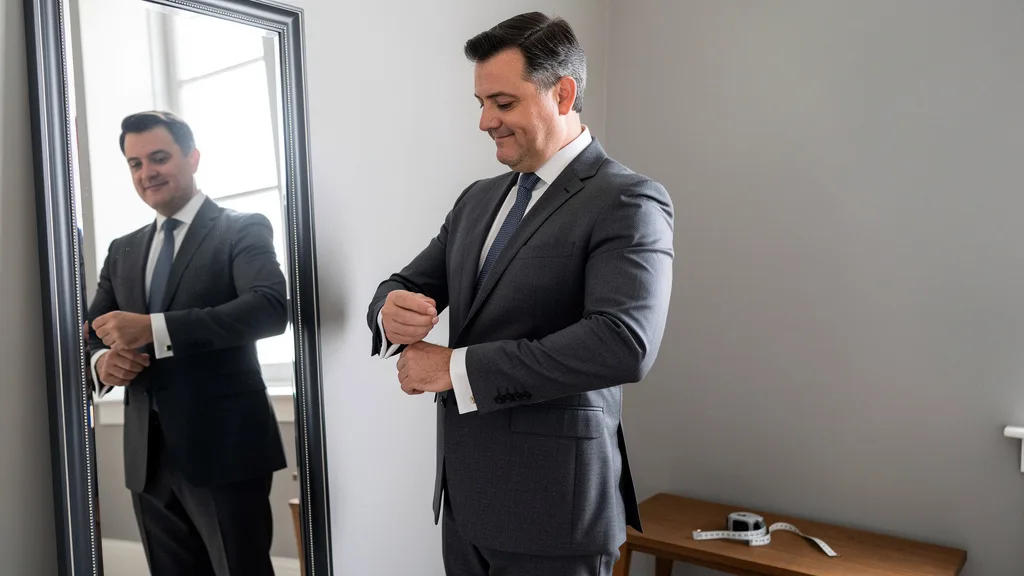
A proper fit across the chest also ensures the shoulders of the jacket align with your own. The shoulder seams should end where your shoulders naturally do. If they extend past, the jacket is too big, and if they cut in, it’s too small. This alignment is difficult to alter, so it’s a key indicator of a good initial fit.
Waist Measurements for Trousers
The waist measurement for XXXL suit trousers generally corresponds to a 44-46 inch waist. It’s important to measure your natural waist, which is typically located just above your navel and is the narrowest part of your torso. Do not rely on your casual pants or jeans size, as suit trousers are measured differently and sit higher on the body.
The “drop” in a suit refers to the numerical difference between the jacket’s chest size and the trousers’ waist size. A standard drop is 6 inches, so a size 52 jacket would often be paired with size 46 trousers. Some brands offer different drops to accommodate various body types, so checking this detail can help you find a better off-the-rack fit. Proper sizing is also key for other garments, as detailed in our shirt size chart guide.
Jacket Length and Sleeve Considerations
The length of the suit jacket and its sleeves significantly impacts the suit’s proportions. A classic suit jacket should be long enough to cover the seat of your trousers. A simple test is to stand with your arms relaxed at your sides; the hem of the jacket should rest in the cup of your hand. This ensures a balanced and professional look.
Sleeve length is equally important. The jacket sleeves should end right at your wrist bone, allowing about a half-inch of your shirt cuff to be visible. This creates a sharp, clean line and adds a touch of sophistication. When shopping, you may see labels like “Regular,” “Short,” or “Long” (e.g., 52L), which adjust the jacket and sleeve length for different heights.
How to Measure Yourself for an XXXL Suit
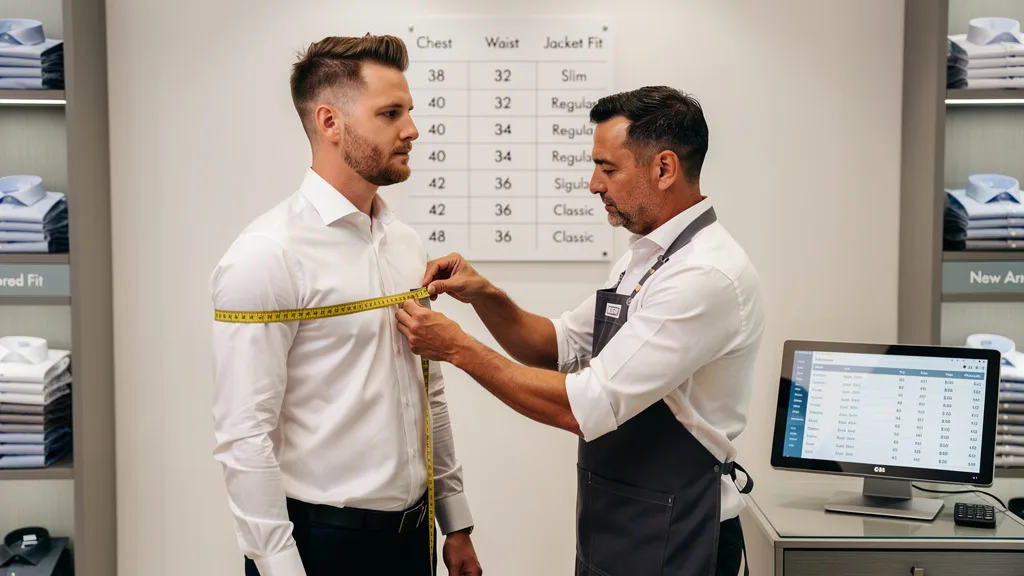
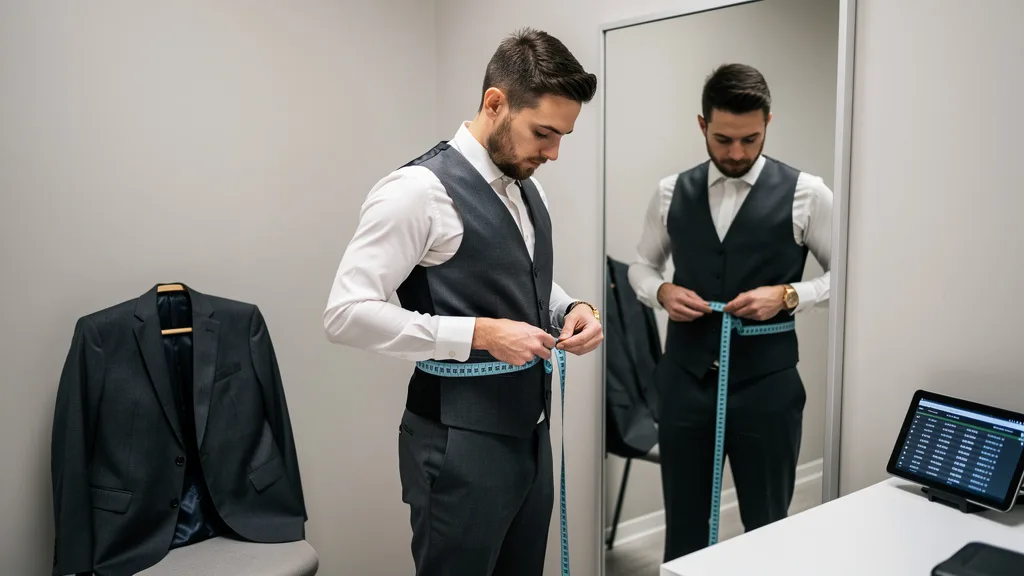
Taking your own measurements accurately is the most reliable way to succeed when shopping for a suit online. All you need is a soft, flexible measuring tape and a few minutes. For the best results, wear a thin, fitted shirt and stand in a natural, relaxed posture. It can be helpful to have someone assist you, but you can do it yourself.
Measuring Your Chest Accurately
To measure your chest, wrap the measuring tape around the fullest part of your chest, typically just under your armpits and across your shoulder blades. Ensure the tape is level all the way around and parallel to the floor. It should be snug against your body but not so tight that it constricts your breathing. Take the measurement and write it down. This number is the primary indicator for your jacket size.
Finding Your Correct Waist Size
For your trouser waist, locate your natural waistline. This is usually the area just above your belly button. Wrap the tape measure around this point, keeping it level. Again, the tape should be snug but not digging into your skin. Avoid the temptation to suck in your stomach, as this will result in an inaccurate measurement and uncomfortable trousers. This number is what you should use when referencing a size chart.
Measuring for sleeve length, or the inseam, is best done with a partner. Stand straight with your arm relaxed at your side. Have your partner measure from the center of the back of your neck, across the top of your shoulder, and down your arm to your wrist bone. For jacket length, measure from the base of the back of your neck down to the point where you want the jacket to end, which should ideally be around your knuckles or where your fingertips end.
Common Fit Problems with XXXL Suits and Solutions
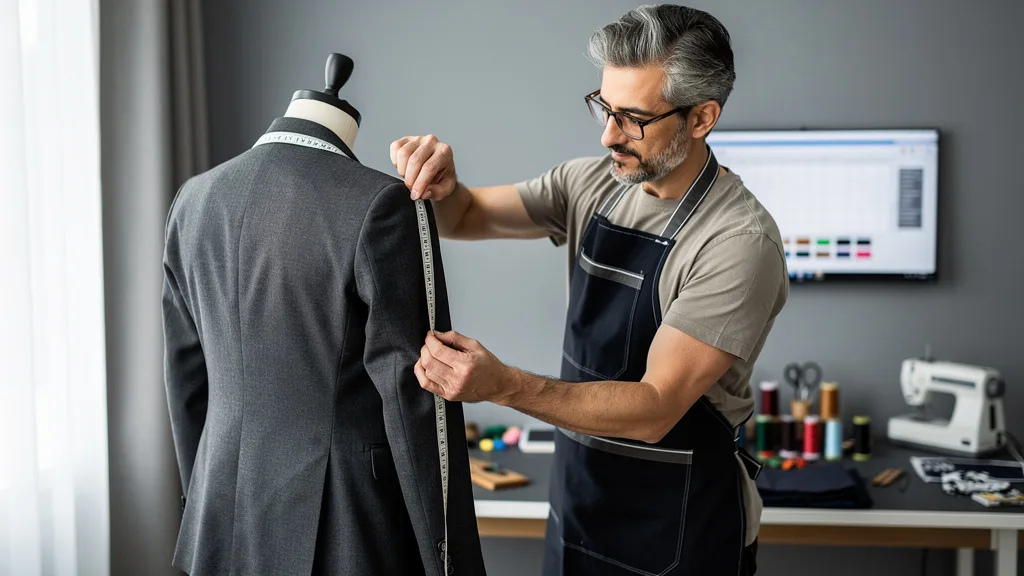
Even with careful measurement, you might encounter fit issues with off-the-rack XXXL suits. A common problem is the shoulder area being too tight or the jacket pulling at the button when closed. This indicates that the jacket’s cut may not be right for your body shape, and you might need to look for a brand that offers a more generous cut or a different drop.
Another frequent issue is trousers that are too baggy in the seat or legs. While intended for a larger frame, some XXXL suits can be overly generous in their proportions. The solution to most fit problems is a good tailor. Simple alterations like hemming trousers, adjusting sleeve length, or taking in the jacket’s waist can transform an average-fitting suit into one that looks custom-made for you.
“A well-fitting suit is an investment in your confidence. Even an off-the-rack XXXL suit can look bespoke with minor alterations, proving that great style is accessible at any size.”
Comparing XXXL to Other Common Suit Sizes
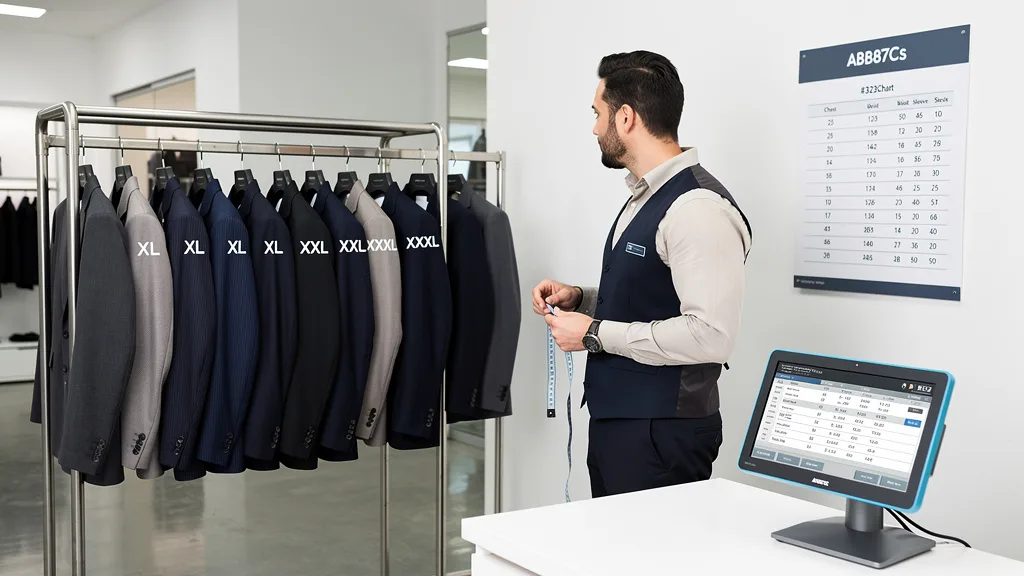
To put the XXXL size in context, it’s helpful to see how it compares to other common sizes. This can help you determine if you need to size up or down and understand the typical increments between sizes. Remember that these are general guidelines, and you should always refer to a specific brand’s chart for the most accurate information.
| Size | Typical Chest (Inches) | Typical Waist (Inches) |
|---|---|---|
| XL | 46-48″ | 40-42″ |
| XXL | 48-50″ | 42-44″ |
| XXXL (3XL) | 50-52″ | 44-46″ |
| XXXXL (4XL) | 52-54″ | 46-48″ |
As you can see, sizes typically increase by two inches for both chest and waist measurements. If you find yourself between sizes, it is usually better to size up and have the garment tailored down for a perfect fit. This is especially true for more structured garments like jackets. For those needing even larger options, exploring specialized collections like XXXXL size jerseys can provide more insight into plus-size fits.
Tips for Shopping for XXXL Suits Online
Shopping for a suit online can be convenient and offer a wider selection. However, it requires a bit more diligence to ensure you get the right fit. By following a few key tips, you can greatly increase your chances of finding an XXXL suit that you love without the hassle of returns.
- Always Check the Brand’s Size Chart: This is the most important rule. Never assume your size is the same across different brands. Look for a detailed chart that provides measurements in both inches and centimeters.
- Read Customer Reviews: Reviews from other customers can provide invaluable information about a suit’s fit. Look for comments on whether the suit runs true to size, large, or small.
- Understand the Return Policy: Before you buy, make sure the retailer has a fair and easy return policy. This gives you a safety net in case the suit doesn’t fit as expected.
- Look for Brands Specializing in Big and Tall: Some brands are experts in creating clothing for larger frames and offer better proportions and a more comfortable fit than standard brands.
- Consider Buying Separates: If your chest and waist measurements don’t align with a standard drop, buying a suit jacket and trousers separately can be the perfect solution.
- Check Fabric Composition: Fabrics with a small amount of stretch (like elastane or spandex) can offer a more forgiving and comfortable fit, adapting better to your movements.
Key Takeaways
Finding the right XXXL suit doesn’t have to be a frustrating experience. By arming yourself with the right information, you can shop confidently and effectively. Here are the most important points to remember from this guide:
- An XXXL (3XL) suit generally corresponds to a chest size of 50-52 inches and a waist size of 44-46 inches.
- Always measure yourself accurately and compare your numbers to the specific brand’s XXXL suit size chart.
- Pay close attention to the fit across the shoulders and chest, as these areas are difficult to alter.
- Jacket and sleeve length are crucial for proper proportion and a polished appearance.
- Don’t be afraid to use a tailor. Minor adjustments can make an off-the-rack suit look completely custom.
Frequently Asked Questions
Is a 3XL the same as a 56 or 58 suit size?
The relationship between letter sizes (like 3XL) and numerical suit sizes (like 52, 54, 56) can be confusing and varies by region. In US sizing, a 3XL most commonly corresponds to a size 50 or 52 jacket. European sizes, often denoted as 56 or 58, are different. A European size 58 is roughly equivalent to a US size 48, so it is not the same as a 3XL.
Do all brands use the same XXXL suit size chart?
It is crucial to know whether you are looking at US, UK, or European sizing. Always check the brand’s chart and look for chest measurements in inches or centimeters to get the most accurate conversion. Never assume that a 3XL from one country or brand will match another’s.
What is the difference between ‘Big’ and ‘Tall’ in XXXL sizing?
No, all brands do not use the same XXXL suit size chart. While there are industry standards that provide a general guideline, each manufacturer has its own unique sizing specifications and fit models. A 3XL from one brand might fit like a 2XL or 4XL from another.
Can an XXXL suit be tailored for a better fit?
This is why we strongly advise against buying a suit based on the letter size alone. Always locate the specific size chart for the product you are interested in and compare your personal measurements to it. This is the single most effective way to ensure a good fit when shopping online.
How do UK and US XXXL suit sizes typically differ?
The terms ‘Big’ and ‘Tall’ address different fit needs for larger body types. ‘Big’ sizes (like XXXL) are designed for men who have a larger frame in terms of width, including a broader chest, shoulders, and waist. The proportions are scaled up horizontally.
‘Tall’ sizes (often denoted with an ‘L’ after the size, e.g., ‘XXLT’) are designed for men who are typically 6’2″ or taller. These sizes add extra length to the garment’s torso and sleeves without necessarily increasing the width. A man who is both broad and tall might need a ‘Big and Tall’ size for the best fit.
Absolutely. Tailoring is a fantastic way to perfect the fit of an off-the-rack XXXL suit. In fact, most suits, regardless of size, benefit from some level of alteration to customize them to the wearer’s unique body shape. It’s often a necessary step for achieving a truly high-end look.
Common alterations include hemming the trousers to the correct length, adjusting the sleeve length, taking in the jacket waist for a more defined shape, and slimming the trouser legs. These relatively minor adjustments can make a dramatic difference, elevating the suit’s appearance from simply fitting to flattering.
UK and US suit sizes are generally quite similar, with both systems based on the chest measurement in inches. An XXXL in the US will often correspond directly to an XXXL in the UK. However, there can be subtle differences in the cut and overall fit.
Some find that UK sizing can run slightly more fitted or ‘slimmer’ than its US counterpart. As always, the best practice is to ignore regional assumptions and focus on the concrete measurements provided in the brand’s size chart. This removes any guesswork and ensures you are choosing a size based on data, not generalization.
Conclusion
Navigating the XXXL suit size chart is the first and most important step toward finding a suit that offers impeccable style and comfort. By understanding your key measurements for the chest, waist, and jacket length, you can demystify size charts and shop with greater confidence. Remember that tailoring is your best friend for perfecting the fit, turning a good off-the-rack suit into a great one that looks and feels custom-made for you.
Now that you’re equipped with the knowledge to find your perfect size, you can explore collections with an expert eye. Our premium suits are crafted with breathable fabrics and a focus on superior fit for every body type. Find the style that speaks to you and experience the difference a well-made suit can make. SHOP NOW.