

Have you ever invested in a premium suit, only to feel that something is not quite right? A well-fitting suit can project confidence and sophistication, but even the most luxurious fabric can be undermined by poor tailoring. The difference between looking sharp and looking sloppy often comes down to a few critical details.
The most common suit fitting mistakes that can ruin your look include an incorrect shoulder fit, an ill-fitting jacket body, improper sleeve and jacket length, poorly tailored trousers, and breaking the traditional suit button rules. Avoiding these errors is the key to ensuring your suit enhances your silhouette and presents a polished, professional appearance for any occasion.
Mistake 1: Getting the Shoulder Fit Wrong
The shoulders are the most crucial element of a suit jacket’s fit. Because they provide the garment’s primary structure, they are also the most difficult and expensive part to alter. Getting this right from the start is non-negotiable for a truly elegant fit.
Signs of a Poor Shoulder Fit
A poorly fitting shoulder is easy to spot once you know what to look for. If the shoulder pads extend beyond your natural shoulder line, the jacket is too big, creating a slumped, dated look. This often causes a divot or collapse in the fabric just below the shoulder pad. Conversely, if the seam sits too high on your shoulder, the jacket is too small. This will cause pulling and creasing across your upper back and restrict your arm movement, making you look and feel constrained.

When trying on a jacket, stand naturally and observe where the seam lies. It should end precisely where your shoulder bone ends. Any significant deviation from this point indicates a poor fit that tailoring may not be able to fully correct. A proper fit in this area ensures the rest of the jacket drapes correctly.
How to Achieve Perfect Shoulder Alignment
To ensure perfect shoulder alignment, the jacket’s shoulder seam must sit flat and align directly with the end of your clavicle, where your shoulder begins to curve downwards. There should be no pulling or bunching of fabric. A simple way to test this is the wall test: lean gently against a wall. The shoulder pad of the jacket should touch the wall at the same time as your natural shoulder. If the pad hits first and compresses, the jacket is too wide. If your arm hits first, it’s too narrow.
When you purchase a suit, especially off the rack, prioritize the shoulder fit above all else. Other areas like the waist and sleeve length are much easier for a tailor to adjust. A well-tailored suit starts with a solid foundation, and that foundation is a perfect shoulder fit.
Mistake 2: An Ill-Fitting Jacket Body
After the shoulders, the fit of the jacket’s body, or torso, is the next most important area. This determines your silhouette and can either create a sharp, defined shape or a boxy, unflattering one. The goal is to find a balance between comfort and a clean, tailored line.
The ‘X’ Crease and Other Telltale Signs
The most obvious sign of a jacket that is too tight is the dreaded ‘X’ crease. When you fasten the top button (or middle button on a three-button suit), if the fabric pulls and forms an ‘X’ shape, the jacket is too small. This not only looks strained but also puts unnecessary stress on the button and fabric. The lapels may also bow outwards instead of lying flat against your chest.
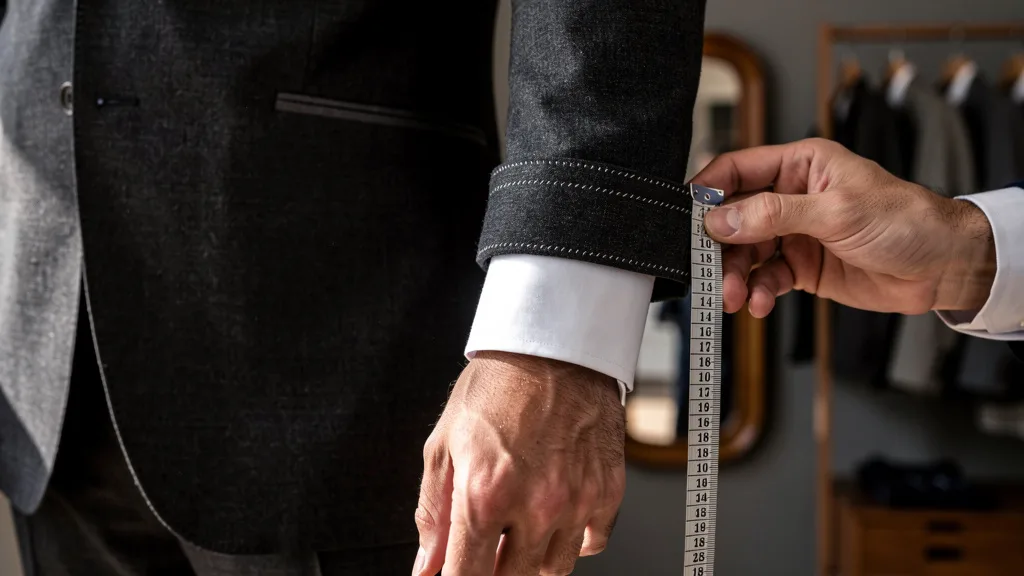
On the other hand, a jacket that is too large will have no discernible shape. It will hang from your shoulders like a box, obscuring your natural waistline and making you appear larger than you are. There will be excess fabric around your midsection and back, creating a sloppy and unprofessional look. expert tips for choosing the perfect dress shirt.
Finding the Right Balance for a Polished Look
A well-fitting jacket should lightly hug your torso, accentuating your physique without constricting it. When the top button is fastened, you should be able to slide your flat hand comfortably between the jacket and your shirt. If you can fit a full fist, it’s too loose. This ensures you have enough room to move while maintaining a clean silhouette.
The button stance, or the placement of the top button, is also critical. Ideally, it should sit at or just above your navel. This placement creates a flattering ‘V’ shape that visually lengthens your torso and slims your waistline. For a more relaxed but still smart appearance, a casual suit offers more flexibility while still demanding a good fit.
Mistake 3: Incorrect Sleeve and Jacket Length
The length of your jacket and its sleeves plays a significant role in the overall balance and proportion of your outfit. These details might seem minor, but they are crucial for achieving a truly polished and intentional look. Getting them wrong can make an expensive suit appear cheap and ill-fitting.
How Much Shirt Cuff Should Show
One of the most classic rules of men’s tailoring concerns the relationship between the jacket sleeve and the shirt cuff. The jacket sleeve should be short enough to expose about a quarter to a half-inch of your shirt cuff. This creates a clean, deliberate break between the suit and your hands and adds a touch of sophistication. It also helps protect the edge of your jacket sleeve from wear and tear.

To check the length, stand with your arms relaxed at your sides. The jacket sleeve should end right at your wrist bone, allowing your shirt sleeve, which should end where your thumb meets your wrist, to peek out. If no cuff is visible, your sleeves are too long. If more than an inch of cuff shows, they are too short.
Determining the Ideal Jacket Hemline
The ideal length of a suit jacket is a matter of both tradition and proportion. The most common guideline is that the bottom hem of the jacket should be long enough to cover the seat of your trousers. This creates a continuous line and prevents the jacket from looking chopped off. GQ offer excellent guides.
Another reliable method is to stand with your arms relaxed at your sides. The jacket hem should end around the middle of your hand, near your knuckles or where your thumb joint bends. This rule of thumb ensures the jacket is proportional to your body, balancing your upper and lower half. A jacket that is too short can make your torso look small and your legs appear disproportionately long, while a jacket that is too long can make your legs look short.
“The length of a jacket dictates the entire proportion of the suit. It’s the anchor of the look. Get it right, and everything else falls into place. Get it wrong, and the entire silhouette is compromised.”
– Savile Row Tailoring Proverb
Mistake 4: Poorly Tailored Trousers
While the jacket often gets the most attention, your trousers are just as important for a cohesive and sharp look. Poorly fitting trousers can instantly ruin the silhouette of an otherwise perfect suit. Key areas to focus on are the length, the seat, and the line of the leg.
Understanding the Different Trouser Breaks
The “break” refers to the fold or crease in the fabric of your trousers where they meet your shoes. The amount of break is a matter of personal style, but it’s important to choose one and execute it well. A sloppy, unintentional break just looks like your trousers are too long. Understanding the different styles helps you make an informed choice for a clean finish.
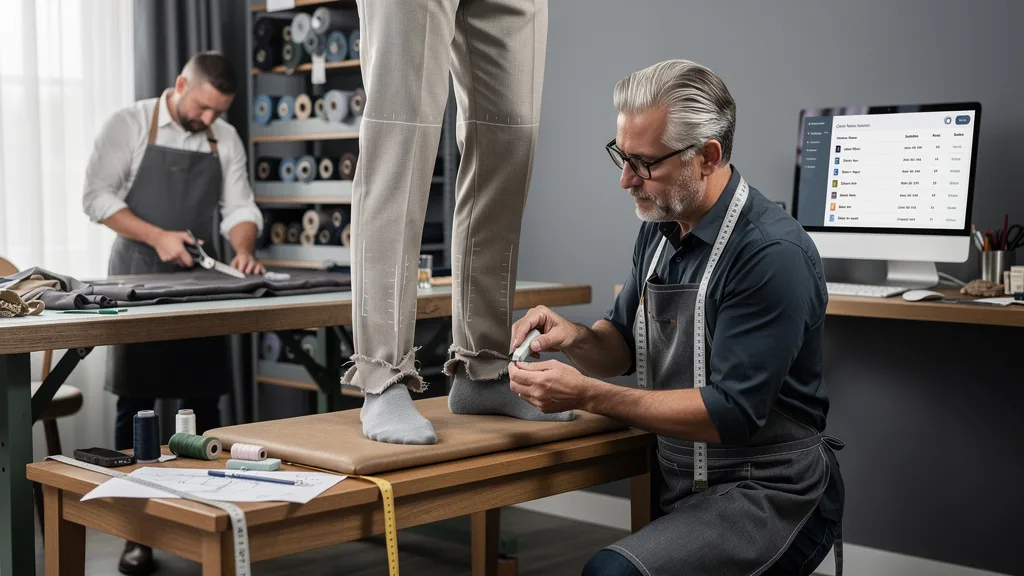
The table below outlines the common trouser break styles. A slight or half break is generally considered the most versatile and timeless option for business and formal wear. For more detailed information on trouser styles, you can refer to external guides like Wikipedia’s entry on the clothing break.
| Break Style | Description | Best For |
|---|---|---|
| No Break | The trouser hem just skims the top of the shoe with no fold. Creates a very clean, modern, and sharp line. | Slim-fit suits, shorter men (as it elongates the leg line). |
| Slight/Quarter Break | A very subtle fold where the trouser meets the shoe. The hem is typically angled slightly longer at the back. | A modern, versatile, and universally flattering choice for most body types. |
| Half Break | A single, noticeable fold in the fabric above the shoe. The classic and most traditional choice for business suits. | Conservative office environments and classic-fit suits. |
| Full Break | A deep, prominent fold that can sometimes create multiple creases. Creates a very traditional, old-school look. | Taller men, wider-leg trousers, and pleated pants. Can look dated if not styled carefully. |
Avoiding Stuffed Pockets and a Saggy Seat
The fit around your hips and seat is critical. Suit trousers should drape cleanly from your waist over your seat without being too tight or too loose. If the fabric is pulling at the pockets, making them flare out, the trousers are too tight in the hips. This is not only unflattering but also uncomfortable. formal vs casual trousers guide.
A saggy seat, where there is excess fabric below your backside, is another common fitting issue that makes a suit look cheap. The trousers should follow your natural shape without excess material. To maintain a clean line, avoid stuffing pants pockets with bulky items like large wallets, keychains, or phones. These items disrupt the drape of the fabric and create unsightly bulges. Use your jacket’s inner pockets for essential items to maintain a sleek silhouette.
Mistake 5: Breaking the Suit Button Rules
Suit buttoning rules are steeped in tradition, but they also serve a practical purpose in maintaining the garment’s intended shape and drape. Following these simple conventions is an easy way to show that you understand the nuances of wearing a suit and to ensure you always look your best.
The ‘Sometimes, Always, Never’ Rule Explained
The most famous buttoning convention applies to a three-button jacket and is known as “Sometimes, Always, Never.” This simple mnemonic makes it easy to remember how to fasten your jacket for a polished look. The same principles can be adapted for other jacket styles.
- Top Button: Sometimes. Fastening the top button is optional. It can create a slightly more formal, buttoned-up look, but is often left undone for comfort.
- Middle Button: Always. This button is designed to be the jacket’s anchor point. It should always be fastened when you are standing to maintain the suit’s silhouette.
- Bottom Button: Never. The bottom button on a suit jacket should always be left undone.
For a two-button jacket, the rule is even simpler: fasten the top button (Always) and leave the bottom one undone (Never). For a one-button jacket, you should fasten it when standing and unfasten it when sitting.
Why the Bottom Button Stays Undone
The tradition of leaving the bottom button undone is often traced back to King Edward VII of England. However, it has a modern, practical function. Suit jackets are tailored with the assumption that the bottom button will remain open. Fastening it restricts movement and causes the jacket to pull and bunch around your hips, creating an unflattering ‘X’ crease and ruining the suit’s drape.
Leaving it undone allows the jacket’s quarters (the front panels below the waist) to flare out naturally, providing greater comfort and a more elegant silhouette, especially when you move. It is one of the simplest common mistakes to avoid and instantly signals a more refined approach to style. For further reading on suit etiquette, authoritative sources like GQ offer excellent guides.
Key Takeaways
Mastering the art of suit fitting is essential for anyone looking to make a powerful impression. By avoiding these five common pitfalls, you can transform your appearance from average to exceptional. Here is a short list of the key points to remember for your next suit purchase or fitting in 2026. suiting shirts vs dress shirts.
- Perfect the Shoulders: The jacket’s shoulder seam must align perfectly with your natural shoulder bone. This is the most critical part of the fit and the hardest to alter.
- Nix the ‘X’ Crease: Your jacket body should contour your torso without pulling. If you see an ‘X’ shape when buttoned, it’s too tight. You should be able to slide a flat hand inside.
- Mind the Lengths: Show about a quarter to a half-inch of your shirt cuff below the jacket sleeve. The jacket hem should cover your seat and end near your knuckles.
- Tailor the Trousers: Choose a deliberate trouser break (slight or half break is most versatile) and ensure the seat is clean and not saggy. Avoid stuffing your pockets.
- Follow Button Rules: For a two-button suit, always fasten the top and never the bottom. For a three-button suit, remember ‘Sometimes, Always, Never’.
Frequently Asked Questions
How much does it cost to tailor a suit in 2026?
In 2026, the cost to tailor a suit can vary widely based on your location, the tailor’s expertise, and the complexity of the alterations. Basic adjustments like hemming trousers or shortening sleeves might cost between $20 to $40 per alteration. More complex work, such as adjusting the jacket’s shoulders or tapering the body, can range from $50 to $150 or more.
For a full suite of alterations on an off-the-rack suit, you can expect to pay anywhere from $100 to $300. While this adds to the overall cost, investing in a skilled tailor is crucial for achieving a perfect fit that makes a $500 suit look like it’s worth $2,000.
Can an off the rack suit fit perfectly with tailoring?
Yes, an off-the-rack suit can absolutely achieve a near-perfect fit with the help of a good tailor. However, the key is to start with a suit that fits well in the most difficult-to-alter areas, primarily the shoulders. A tailor can easily adjust sleeve length, hem trousers, and take in the waist.
Significant changes to the chest or shoulders are much more difficult and costly, and may not yield perfect results. Therefore, when buying off the rack, prioritize the fit across the shoulders and chest, and let your tailor handle the rest to achieve that bespoke feel.
What is the most important part of a suit’s fit?
The most important part of a suit’s fit is unequivocally the shoulders. The shoulder construction serves as the foundation for how the entire jacket drapes on your body. If the shoulders are too wide, you’ll have divots and a sloppy look. If they’re too narrow, the jacket will pull and restrict movement.
Unlike other parts of a suit, the shoulders are incredibly complex to alter, involving multiple layers of fabric, padding, and lining. A significant shoulder alteration is essentially deconstructing and reconstructing the jacket, which is why most tailors advise against it. Always ensure the shoulders fit perfectly before purchasing.
How do you know if a suit jacket is too small?
There are several clear signs that a suit jacket is too small for you. The most prominent is the ‘X’ crease that forms across the front when you fasten the top button. This indicates the jacket is too tight around your torso. You may also feel tightness and pulling across your upper back and shoulders, which restricts your range of motion.
Other signs include the lapels bowing out instead of lying flat on your chest, and the shoulder seams sitting too high up on your natural shoulder line. A properly fitting jacket should feel snug but not restrictive, allowing you to move with relative ease.
Should you be able to raise your arms comfortably in a suit?
You should be able to perform normal daily movements comfortably, such as shaking hands, reaching for an item, or driving a car. However, a suit jacket is not athletic wear. You should not expect to have a full, unrestricted range of motion, such as raising your arms straight above your head without the jacket lifting significantly.
When you raise your arms to a horizontal position, the jacket will naturally lift a bit, but it shouldn’t feel excessively tight or constricting in the armholes or across the back. The primary goal of a suit is to provide a sharp silhouette when you are standing or sitting, with enough comfort for professional and social interactions.
Conclusion
Avoiding these 5 suit fitting mistakes that ruin your look is the most effective way to elevate your style and ensure your investment in quality apparel pays off. A well-fitting suit does more than just look good; it instills a sense of confidence and commands respect. By focusing on the shoulders, torso, lengths, trousers, and buttoning details, you can achieve a sophisticated silhouette that appears custom-made.
Ready to find a suit that provides the perfect canvas for expert tailoring? Our collection of premium suits for men and women is crafted with meticulous attention to detail and superior fabrics, designed to give you an exceptional starting point for your perfect fit. Explore our latest arrivals and discover the difference quality makes.
If you want help turning this into a concrete plan for your site or team, take the next step below to apply 5 Suit Fitting Mistakes That Ruin Your Look with confidence.
Ready to act on 5 Suit Fitting Mistakes That Ruin Your Look? SHOP NOW — tell us your goal, and we will help you pick the highest-leverage next step so you are not guessing alone.