

Have you ever invested in a quality suit only to feel it looks off, but you can’t quite figure out why? For bigger guys, finding a suit that flatters your frame can feel like a challenge, but the secret isn’t about spending more money; it’s about avoiding a few critical errors. Understanding how a suit should properly sit on your body is the key to unlocking a look that is sharp, professional, and comfortable.
The most frequent suit fitting mistakes big guys make involve choosing overly baggy clothing, ignoring key fit points on the jacket and trousers, selecting unflattering fabrics, and mismatching accessory proportions. Correcting these common suit mistakes ensures your suit complements your body shape perfectly, projecting confidence and style for any occasion.
Why a Proper Suit Fit Is Crucial for Big Guys
A well-fitted suit does more than just make you look good; it transforms how you feel and how others perceive you. For men with a larger build, a proper fit is paramount because it creates structure and a streamlined silhouette. Ill-fitting garments can add perceived bulk and look sloppy, undermining the very purpose of wearing a suit: to present a polished and put-together image. When your suit fits correctly, it enhances your physique rather than hiding it.

Prioritizing fit over brand name or price is the most important rule in menswear. A perfectly tailored, affordable suit will always look superior to an expensive, off-the-rack designer suit with a poor fit. This principle is especially true for plus-size gentlemen, where the right tailoring can make a world of difference. Investing a small amount in alterations can elevate your entire wardrobe and ensure you make the best possible impression, whether in the boardroom or at a special event. Finding clothing that fits well can be a journey, and there are many excellent XXXXL clothing brands for big guys that prioritize both style and fit.
“The first impression is often the last. A suit that fits perfectly doesn’t just cover your body; it introduces you with professionalism and confidence before you even speak. For bigger guys, avoiding common suit fitting mistakes is the single most effective way to command respect in any room.”
Mistake 1: Choosing a Suit That Is Too Baggy
One of the most frequent errors larger men make is choosing a suit that is several sizes too big. This is often done under the mistaken belief that baggy clothes will hide their frame. In reality, excess fabric does the opposite: it adds visual weight, creates a bulky and unkempt appearance, and completely obscures your body’s natural shape. A suit should drape cleanly over your body, not hang from it like a tent.
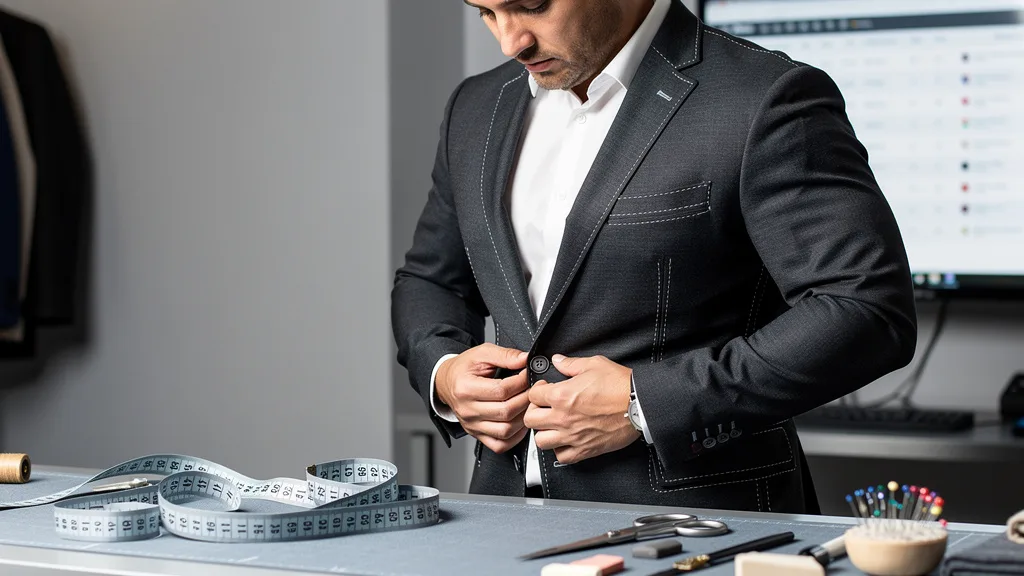
Instead of sizing up, focus on finding a suit that fits your widest points (typically the shoulders or stomach) and then have it tailored down in other areas. A skilled tailor can take in the waist, slim the sleeves, and taper the trousers to create a silhouette that is both comfortable and flattering. Remember, a fitted suit is not the same as a tight suit. The goal is a clean line that follows your form without pulling or bunching.
Mistake 2: Ignoring Key Jacket Fit Points
The suit jacket is the cornerstone of your look, and getting its fit right is non-negotiable. Many men overlook crucial details beyond the overall size, leading to a jacket that looks awkward and feels uncomfortable. Paying attention to specific areas like the shoulders, chest, and length is essential for achieving a polished appearance. A wrong jacket fit can ruin the entire outfit, no matter how high-quality the material is.
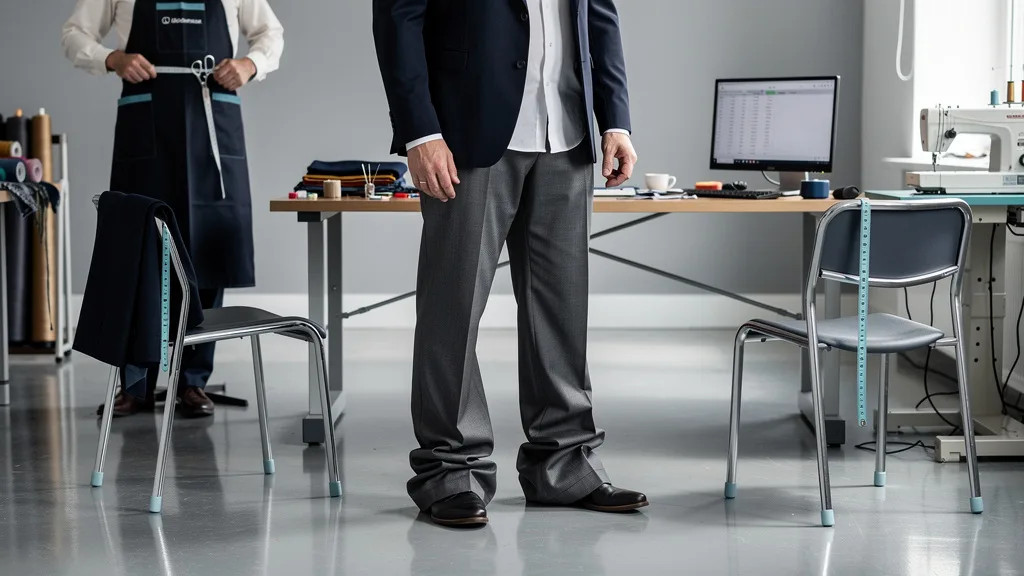
To ensure your jacket complements your body shape perfectly, you need to check several key points. From the shoulder seam placement to the button stance, each element plays a role in how the jacket drapes on your frame. A correctly fitted jacket will provide structure and create a V-shape in the torso, which is flattering for all body types, including larger builds.
Incorrect Shoulder and Chest Fit
The most critical fit point on any suit jacket is the shoulders. The shoulder seam should end exactly where your natural shoulder does. If the seam hangs over your shoulder, the jacket is too big and will create a slumped, sloppy look. If the seam sits too high on your shoulder, it’s too small, causing pulling and restricting movement. You should see a smooth, clean line from the collar to the shoulder seam without any divots or bunching.
The chest fit is equally important. When you button the top button (never the bottom one on a two-button suit), the lapels should lie flat against your chest. If you see a prominent ‘X’ shape forming around the button, the jacket is too tight. Conversely, if there’s a large gap between your chest and the jacket, it’s too loose. You should be able to slide your hand comfortably between your chest and the buttoned jacket, but not much more.
Wrong Jacket Length and Button Stance
Jacket length can dramatically affect your body’s proportions. A jacket that is too long will visually shorten your legs, making you appear shorter and heavier. A jacket that is too short can look comical and expose too much of your seat and torso. The ideal jacket length for most men is one that just covers the seat of your trousers. Another reliable method is to let your arms hang naturally at your sides; the hem of the jacket should rest in the cup of your hand or around your knuckles.
The button stance, or the placement of the top button, also plays a crucial role. For bigger guys, a slightly lower button stance can be more flattering as it creates a longer, deeper ‘V’ shape, which has a slimming effect on the torso. The top button should ideally sit at or just above your navel. If it’s too high, it can make your chest and stomach appear larger.
Sleeves That Are Overly Long or Short
Incorrect sleeve length is a common suit mistake that instantly signals a poor fit. Jacket sleeves that are too long can make you look like you’re wearing a borrowed suit and create a sloppy impression. If they are too short, it can look like the suit has shrunk. The correct length is crucial for a sharp, intentional look.
The rule of thumb is that your jacket sleeves should end right at your wrist bone, allowing about a quarter to a half-inch of your shirt cuff to be visible. This small detail creates a clean visual break between the suit and your hand, adding a touch of sartorial flair. This is one of the easiest and most affordable adjustments a tailor can make, yet it has a significant impact on your overall appearance. have it tailored down.
| Fit Point | Common Mistake (The “Don’t”) | Correct Fit (The “Do”) |
|---|---|---|
| Shoulders | Seam hangs past the natural shoulder (too big) or creates a divot (too small). | Seam ends precisely where your shoulder does, creating a smooth line. |
| Chest | A prominent ‘X’ forms at the button when closed (too tight). | Lapels lie flat. You can slide a hand comfortably inside when buttoned. |
| Jacket Length | Jacket is too long (shortens legs) or too short (exposes seat). | Hem covers the seat of the trousers or ends at your knuckles. |
| Sleeve Length | Sleeves cover the shirt cuff and part of the hand. | Sleeves end at the wrist bone, showing ¼ to ½ inch of shirt cuff. |
Mistake 3: Getting the Trouser Fit Wrong
While the jacket often gets the most attention, poorly fitting trousers can just as easily ruin a suit. Men with larger legs and seats often struggle to find trousers that are comfortable without looking sloppy. The key is to find a balance between having enough room for movement and maintaining a clean, tailored line. Common issues include an incorrect length, or trousers that are either too tight or too baggy in the seat and thighs.
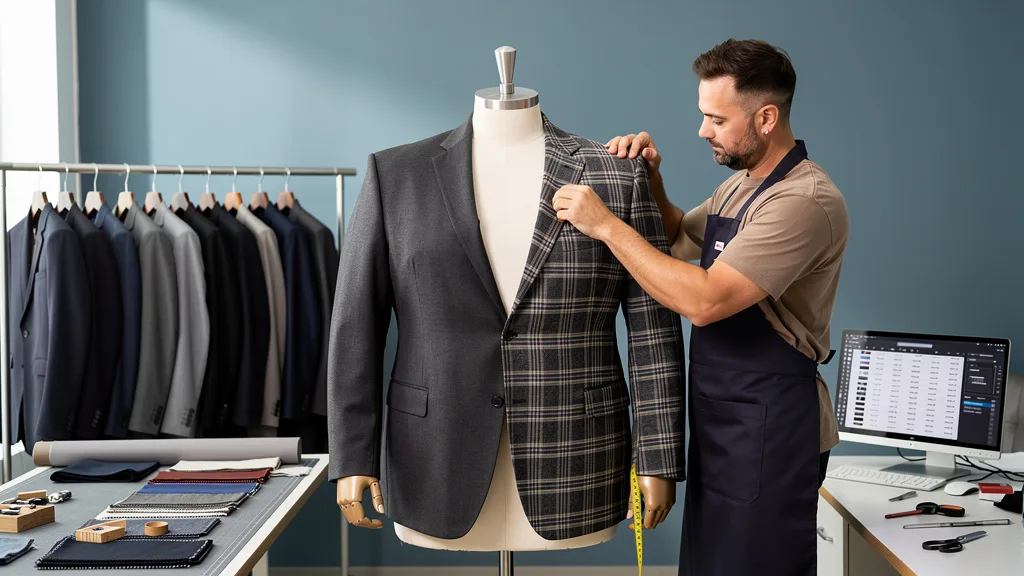
Modern suiting trends favor a more tapered leg, but this doesn’t mean your trousers should be tight. A straight or athletic fit can provide more room through the thigh while still offering a clean silhouette. Just like with the jacket, a small investment in tailoring your trousers ensures they complement your body shape perfectly and complete your polished look.
The Problem with an Incorrect Trouser Break
The ‘break’ is the small fold or crease in the fabric of your trousers that occurs where the hem meets your shoes. The amount of break is a matter of personal style, but for a clean and modern look, a slight or no break is often best. A full break, where there are multiple folds of fabric pooling at your ankles, makes your legs look shorter and can appear very dated and messy. This is a common issue with off-the-rack trousers.
For most men, especially those with larger builds, aiming for a slight break is a safe and flattering choice. This means the trouser hem just grazes the top of your shoes, creating a single, subtle horizontal fold. This creates an uninterrupted vertical line, which helps to visually lengthen your legs. Having a tailor hem your trousers to the correct length is a simple fix that makes a huge difference.
Neglecting Proper Seat and Thigh Room
Comfort is key, and nowhere is that more true than in the seat and thighs of your trousers. Trousers that are too tight in this area will not only be restrictive but will also cause pulling and wrinkling, drawing unwanted attention. You should be able to sit, stand, and walk comfortably without the fabric straining. Pockets should lie flat against your hips and not flare out, as this is a clear sign the fit is too snug.
On the other hand, excessively baggy trousers are just as bad. Too much room in the seat can create a saggy, unflattering look. The ideal fit allows for a comfortable range of motion while draping cleanly from the waist down. Look for trousers that follow the natural line of your leg without clinging or billowing.
Mistake 4: Selecting Unflattering Fabrics and Patterns
The fabric and pattern of your suit can have a significant impact on your overall appearance. For larger men, some choices are inherently more flattering than others. Heavy, bulky fabrics like thick tweed can add unnecessary volume to your frame. Instead, opt for mid-weight, smooth fabrics like worsted wool, which drapes well and provides structure without adding bulk. Breathable fabrics are also key for comfort.
When it comes to patterns, subtlety is your friend. Large, bold patterns like wide windowpane checks or thick horizontal stripes can have a widening effect. Solid colors, especially darker shades like navy, charcoal, and black, are universally slimming and sophisticated. If you want to incorporate patterns, choose subtle vertical pinstripes, which draw the eye upward and create a lengthening effect, or small-scale patterns like a pinpoint or herringbone.
Mistake 5: Overlooking Proportions with Accessories
Your accessories should be in proportion to your body. This is a subtle detail that many men overlook, but it makes a big difference. A man with a broader chest and shoulders will look out of place with a very skinny tie and narrow lapels, as these small-scale details will look diminutive against his frame. The goal is to create balance and harmony in your overall look.
Choose accessories that match your scale. Opt for a standard or slightly wider tie (around 3 to 3.5 inches). Your tie width should generally correspond to your lapel width. Similarly, choose a watch with a larger face and a substantial band that won’t get lost on your wrist. Even your tie knot should be considered; a larger knot like a Full Windsor is more proportional for a larger man with a wider neck than a small Four-in-Hand knot.
What Happens During a Professional Suit Fitting
A professional suit fitting is a straightforward process designed to ensure your suit fits you perfectly. When you visit a tailor or a quality menswear store, an expert will take a series of precise measurements. This typically includes your chest, waist, inseam, arm length, and shoulders. They will have you try on a jacket and trousers that are closest to your size to use as a baseline.
From there, the fitter will pin the garment in key areas to indicate where alterations are needed. They will check the shoulder fit, adjust the jacket waist for proper suppression, mark the correct sleeve and trouser length, and ensure the seat has the right amount of room. They will also discuss your personal preferences, such as the desired trouser break. This collaborative process ensures the final product is tailored not just to your body, but also to your style. For anyone unsure of their size, consulting a detailed XXXL size chart can be a helpful starting point before a fitting.
Key Takeaways
Mastering the art of a well-fitted suit is one of the best style investments a man can make. For bigger guys, avoiding common pitfalls transforms a suit from just clothing into a powerful tool for confidence and professionalism. Remember that fit is always more important than the price tag. A few strategic alterations can make an off-the-rack suit look like it was custom-made for you.
- Avoid Baggy Fits: Extra fabric adds bulk. Choose a suit that fits your widest point and have the rest tailored for a clean silhouette.
- Nail the Jacket Fit: The shoulders are paramount. Ensure the seam sits on your natural shoulder, the chest doesn’t pull, and the length and sleeves are correct.
- Perfect the Trousers: Aim for a slight break at the shoe and ensure there is enough room in the seat and thighs for comfort without being baggy.
- Choose Flattering Materials: Opt for smooth, mid-weight fabrics and subtle patterns or solid dark colors to create a slimming effect.
- Mind Your Proportions: Select accessories like ties and watches that are in scale with your frame to maintain a balanced look.
Frequently Asked Questions
What is the difference between a 42S and a 42R suit size?
The number in a suit size, like ’42’, refers to the chest measurement in inches. The letter that follows—S, R, or L—refers to the length of the jacket and its sleeves. ‘S’ stands for Short, ‘R’ stands for Regular, and ‘L’ stands for Long. These are designed for men of different heights.
A 42S is intended for a man who is shorter than average (typically under 5’7″), with a shorter torso and arms. A 42R is for a man of average height (usually 5’8″ to 6’0″). A 42L is for a taller man (over 6’0″). The jacket body and sleeves will be progressively longer as you move from S to R to L, while the chest measurement remains the same.
Is a $1000 suit a good investment?
A $1000 suit can be a good investment if it meets certain criteria. At this price point, you should expect higher quality fabric (like high-grade wool), better construction (such as a half-canvassed or fully-canvassed jacket), and more refined details. These features help the suit drape better, last longer, and feel more comfortable.
However, the investment is only worthwhile if the suit fits you perfectly. Spending $1000 on a suit that fits poorly is a waste of money. It is often better to buy a $500 suit and spend $150 on expert tailoring than to wear an unaltered $1000 suit. The value lies in the combination of quality materials and an impeccable fit.
What is the 5-suit rule for men?
The “5-suit rule” is a classic guideline suggesting that a professional man should own a core collection of five versatile suits to be well-prepared for any occasion. This collection typically provides enough variety to rotate through during a work week and covers different levels of formality. It’s a framework for building a functional and stylish wardrobe.
The traditional five suits include: a solid navy suit (for versatility), a solid charcoal or grey suit (for business formality), a black suit (for formal events), a lighter grey or tan suit (for warmer weather or casual settings), and a subtly patterned suit (like a pinstripe or check) to add variety. Of course, this can be adapted to your personal style and professional needs, such as including a stylish casual suit for less formal environments.
How can I take my own suit measurements accurately?
Taking your own measurements can be tricky, but it’s possible with a flexible measuring tape and some care. It’s always best to have someone assist you for accuracy. Key measurements include the chest (measure around the fullest part, under your armpits), waist (at your natural waistline, usually around the navel), and inseam (from the crotch to where you want your trousers to end).
For the jacket, measure your shoulder width from seam to seam on a well-fitting shirt. For sleeve length, measure from the shoulder seam down to your wrist bone. When in doubt, it is always recommended to get professionally measured by a tailor. This ensures you have the most accurate numbers to work with when shopping.
Conclusion
By understanding and avoiding these 5 common suit fitting mistakes big guys make, you can dramatically improve your style and confidence. The key is to shift your focus from hiding your frame to complementing it with well-structured, properly proportioned garments. Remember that a tailor is your best ally in achieving a perfect fit, and small adjustments to the shoulders, length, and waist can make a world of difference. Ultimately, a great suit is one that feels as good as it looks, allowing you to present the best version of yourself in any setting.
Ready to find a suit that is crafted for both style and comfort? Explore our premium collection of men’s suits, designed with meticulous attention to detail and fit. Let us help you build a wardrobe that makes you feel confident and look impeccable. SHOP NOW.