

Have you ever considered the story behind the simple dress shirt hanging in your closet? This classic garment, a cornerstone of modern menswear, has a rich and fascinating history that reflects shifts in society, technology, and style. Understanding its journey is not just a history lesson; it’s the key to mastering your personal style in 2026.
The Key Milestones in the Evolution of Formal Shirts trace the garment’s journey from a humble linen undergarment in the Middle Ages to the crisp, versatile staple it is today. Key developments include the appearance of the visible collar and cuffs in the 18th century, the invention of the detachable collar in the 19th century for easier cleaning, the move to attached collars in the 20th century for convenience, and the introduction of diverse fits and performance fabrics in the 21st century.

The evolution of the formal shirt is a story of transformation from a hidden piece of clothing to a prominent symbol of status and professionalism. Originally, shirts were simple, T-shaped garments worn next to the skin to protect more expensive outer layers like doublets and coats from sweat and oils. For centuries, only the collar and cuffs were visible, and a clean, white shirt signified wealth and a gentlemanly status, as it implied you could afford to have it laundered frequently.

The 19th century was a period of significant innovation. The detachable collar, patented in 1827, was a game-changer. It allowed men to maintain a pristine appearance by simply changing the collar and cuffs, which dirtied the fastest, without needing to wash the entire shirt body. This era also saw the shirt front become a canvas for decoration, with ruffles, pleats, and bibs becoming popular for evening wear. The move towards more practical, attached collars began in the early 20th century, cementing the shirt’s form as we largely recognize it today.
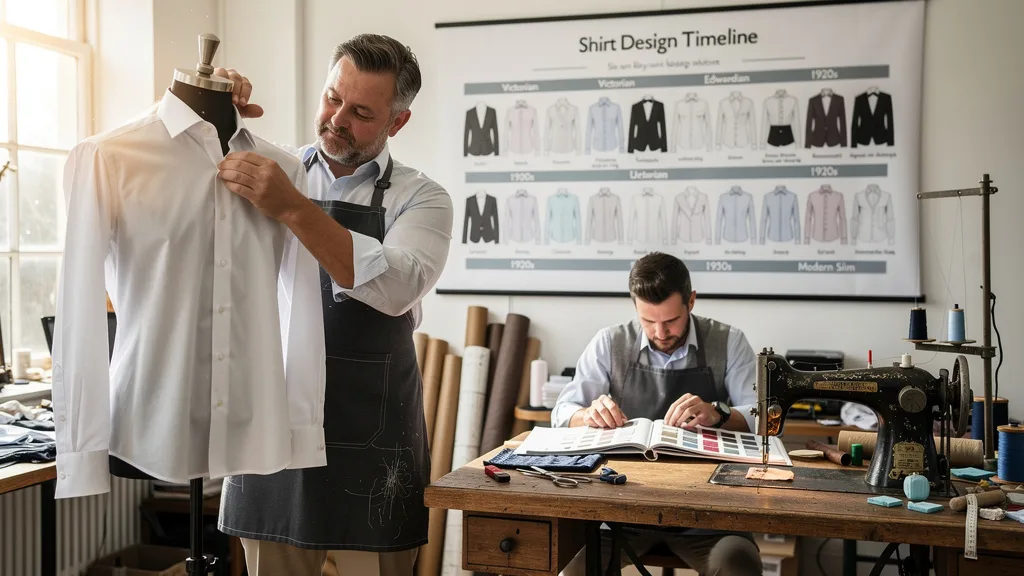
The table below outlines the major shifts in the design and function of the formal shirt over time, showing how this classic garment evolved.
| Era | Key Development | Social & Functional Significance |
|---|---|---|
| Pre-18th Century | Plain, undyed undergarment | Worn for hygiene; not a visible fashion item. |
| 18th Century | Visible frilled collars and cuffs | First signs of the shirt as a decorative status symbol. |
| 19th Century | Detachable collars and stiff fronts | Practicality for laundering; rise of the white-collar worker. |
| Early 20th Century | Attached, soft collars become standard | Increased comfort and a move towards less rigid formality. |
| Mid-20th Century | Introduction of colors, patterns, and synthetic blends | The shirt becomes an expression of personal style. |
| 21st Century | Diverse fits (slim, athletic), performance fabrics | Focus on personalization, comfort, and functionality. |
Understanding the history of the shirt provides essential context for navigating the complexities of modern menswear in 2026. Every element of a contemporary formal shirt, from its collar shape to its cuff style, has historical roots. Knowing this background empowers you to make more intentional and stylish choices, appreciating why a spread collar works best with a large tie knot or why French cuffs are reserved for more formal occasions. what looks good and fits right in XXXXL shirts.

This historical knowledge also helps you identify quality and timeless design. Trends come and go, but the core principles of a well-made shirt, established over centuries, remain constant. By recognizing the classic elements, you can invest in garments that will outlast fleeting fads, building a sustainable and versatile wardrobe. The history of the shirt is not just about the past; it’s a practical guide to dressing well in the present and future.

“The formal shirt is the single most indispensable item in a man’s wardrobe. Its evolution tells the story of menswear itself, from rigid formality to personal expression. The key milestones in the evolution of formal shirts show us that true style is built on a foundation of history and quality.”
How to Get Started with Key Milestones in the Evolution
Applying the lessons from the shirt’s evolution to your own wardrobe is straightforward. Begin by building a foundation of essential, high-quality formal shirts. Every man should own a crisp white shirt and a versatile light blue one. These two colors are the historical bedrock of shirting and pair effortlessly with nearly any suit, tie, or trouser combination. Once you have the basics, you can expand with subtle patterns like a fine stripe or check.
Next, pay close attention to the details that define a shirt’s character and formality. The collar is the most important feature. A classic point collar is a safe and versatile choice for any business setting. A spread collar offers a more confident, European look, while a button-down collar, originally from the world of polo, is inherently more casual. Similarly, standard barrel cuffs are perfect for daily wear, whereas double or “French” cuffs, which require cufflinks, should be reserved for formal events and black-tie occasions.
Finally, focus on fabric and fit. The finest shirts are typically made from 100% cotton, with weaves like poplin (smooth and crisp), twill (soft with a slight sheen), and Oxford (durable and more casual). For color coordination, a grey shirt combination guide can provide excellent ideas for expanding your wardrobe beyond the basics. No matter the fabric or style, the fit is paramount. A shirt should be slim enough to avoid billowing at the waist but allow for comfortable movement.
Best Practices for Key Milestones in the Evolution
To honor the legacy of the formal shirt and always look your best, adhere to a few best practices rooted in its history. These guidelines ensure you wear this classic garment with the respect and style it deserves. From fit to maintenance, small details make a significant difference in your overall presentation. quality and timeless design.

Properly styling and caring for your shirts will extend their life and keep you looking sharp. Remember that the shirt is the foundation of a formal outfit, and getting it right sets the tone for everything else.
- Prioritize Fit Above All: The most expensive shirt will look cheap if it doesn’t fit correctly. The shoulder seams should sit at the edge of your shoulders, you should be able to fit two fingers inside the buttoned collar, and the sleeves should end just at the base of your thumb.
- Match Collar Style to Occasion: Use a point or spread collar with a suit and tie for business. Reserve the more casual button-down collar for wear without a tie or with a sport coat. For truly formal events, a wing collar with a tuxedo is the traditional choice.
- Always Press Your Shirts: A wrinkled shirt was historically a sign of low status, and that impression remains. Always wear a clean, well-pressed shirt. Ironing it while slightly damp yields the best results.
- Choose the Right Undershirt (or None): If you wear an undershirt, it should never be visible. The crewneck collar of a T-shirt showing at the neckline of a dress shirt is a major style misstep. Opt for a V-neck or a color that matches your skin tone.
- Master the Sleeve Roll: When dressing down, roll your sleeves neatly. The master roll, where you fold the cuff back and then roll the sleeve over it, looks clean and intentional, unlike a haphazard bunching of fabric. For a comfortable and stylish option, explore the best regular fit shirts for everyday comfort.
Common Mistakes to Avoid
While the formal shirt is a versatile staple, several common mistakes can undermine your look. Being aware of these pitfalls is the first step toward avoiding them and ensuring your presentation is always polished and professional. Many of these errors relate to fit, styling choices, and a lack of attention to detail.

The most frequent error is wearing a shirt that fits poorly. A shirt that is too large will billow around your waist and create a sloppy silhouette, while one that is too tight will pull at the buttons and restrict movement. It’s crucial to know your measurements or try on different fits to find what works best for your body type. For those who need larger sizes, finding a shirt that fits well in the shoulders and chest without being overly baggy in the torso is key, and resources on what looks good and fits right in XXXXL shirts can be invaluable.
Another set of mistakes involves styling and context. Forgetting to tuck in a formal dress shirt, wearing a heavily patterned shirt with a patterned suit and tie, or pairing a formal shirt with overly casual bottoms like distressed jeans can create a disjointed look. Remember the shirt’s formal origins and aim for harmony in your outfit. Finally, neglecting maintenance, such as wearing a shirt with stains, missing buttons, or frayed collars, instantly communicates a lack of care and professionalism.
Key Takeaways
To truly master the art of the formal shirt, it’s helpful to distill its long history and many rules into a few core principles. These key takeaways provide a quick reference for making smart style choices every day.
- Evolution from Function to Fashion: The formal shirt transformed from a hidden undergarment designed for hygiene into a visible centerpiece of menswear, symbolizing status, professionalism, and personal style.
- Details Define Formality: The collar, cuffs, and fabric of a shirt are not arbitrary. Each element has a history and a specific level of formality. A spread collar with French cuffs is more formal than a button-down collar with barrel cuffs.
- Fit is Non-Negotiable: A perfect fit is the most critical element of wearing a formal shirt. Regardless of price or brand, a poorly fitting shirt will always look bad. Pay attention to the shoulders, chest, waist, and sleeve length.
- Context is Everything: Understanding the right occasion for each type of shirt is crucial. A classic white poplin shirt is a go-to for business, while an Oxford cloth button-down is better suited for smart-casual settings.
- Quality Over Quantity: Building a wardrobe of a few high-quality, well-fitting shirts is a better investment than having many cheap, ill-fitting ones. Focus on timeless styles and durable fabrics.
Frequently Asked Questions
What is the timeline of the evolution of clothing?
The evolution of clothing is a vast timeline that begins with animal skins used for warmth in prehistoric times. Key milestones include the development of weaving in the Neolithic period, the draped garments of ancient civilizations like Rome and Greece, the tailored and layered clothing of the Middle Ages, and the explosion of styles during the Renaissance. The Industrial Revolution introduced mass production, and the 20th century brought synthetic fabrics and distinct global fashion movements.
What is the history of shirts?
The history of the shirt begins in antiquity as a simple, T-shaped tunic worn as an undergarment by both men and women. Until the 18th century, it was rarely seen in public. The 19th century was pivotal, introducing detachable collars and cuffs for practicality. The 20th century saw the shirt become a primary fashion item with attached collars, a variety of colors and patterns, and different fits, solidifying its place as a staple of the modern wardrobe. stylish choices.
What is the 3-3-3 rule in fashion for men?
The 3-3-3 rule is a minimalist wardrobe concept or packing strategy. It involves choosing three tops (like shirts or sweaters), three bottoms (like trousers or jeans), and three pairs of shoes. The idea is that these nine items can be mixed and matched to create a surprising number of different outfits, simplifying your wardrobe while maintaining versatility. It’s a practical approach for travel or for anyone looking to build a more curated closet.
What is the history of formal wear?
The history of formal wear as we know it today begins in the 19th century with Beau Brummell, who rejected ornate aristocratic styles for understated, perfectly tailored dark coats and full-length trousers. This established the modern suit. Evening wear evolved into the dinner jacket (tuxedo) in the late 19th century as a more comfortable alternative to the tailcoat. Throughout the 20th century, formal wear rules relaxed slightly but retained their core elements of the suit, white shirt, and tie.
Conclusion
The journey of the formal shirt is a compelling narrative woven into the fabric of social and fashion history. From its origins as a functional undergarment to its current status as a pillar of professional and elegant attire, the shirt has consistently adapted while retaining its classic essence. Understanding the Key Milestones in the Evolution of Formal Shirts provides you with more than just interesting facts; it equips you with the knowledge to build a timeless, versatile, and truly personal wardrobe.
The two most powerful takeaways from this evolution are the non-negotiable importance of fit and the significance of context. A perfectly fitting shirt in the right fabric and style for a specific occasion is the foundation of any great outfit. Secondly, investing in quality pieces with classic details, like a well-structured collar and durable cotton fabric, will serve you far better than chasing fleeting trends. This historical perspective allows you to appreciate the craftsmanship and make smarter purchasing decisions.
Navigating the nuances of formal wear can be complex, but you don’t have to do it alone. By applying these lessons, you can confidently select shirts that not only look great but also feel right for who you are and where you’re going. Ready to find the perfect shirt that honors this rich history while fitting your modern life?
Explore our curated collection of formal and casual shirts designed with timeless style and a perfect fit in mind. Find your next wardrobe staple today. SHOP NOW