
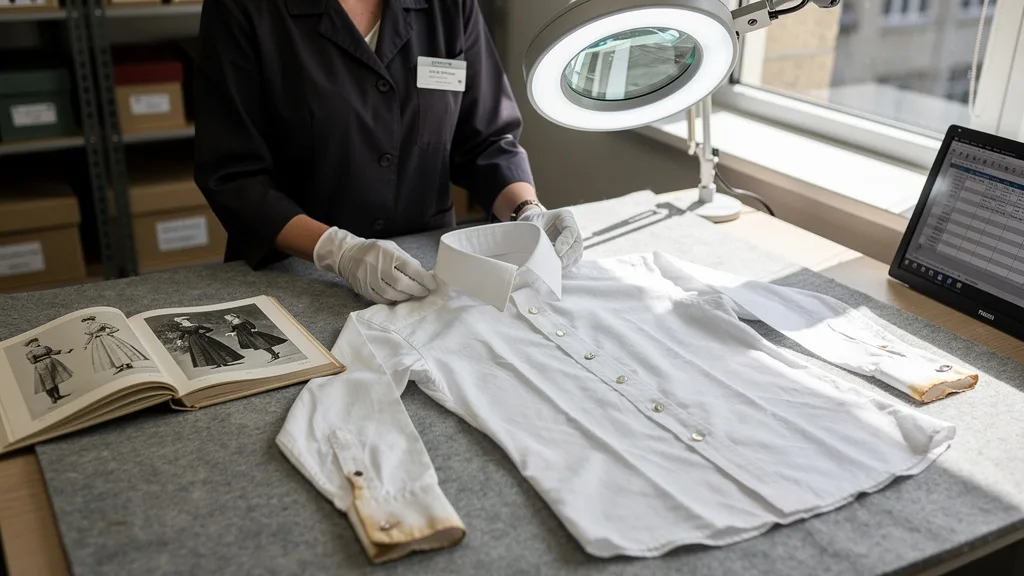
Have you ever wondered how the modern dress shirt came to be? The journey from the rigid, status-driven garments of the Victorian era to the more relaxed, practical styles of the Edwardian period is a fascinating story of social change, technology, and evolving ideas of masculinity. Understanding this transition reveals not just the history of clothing, but the history of the men who wore it.
The evolution from Victorian to Edwardian: A History of Formal Shirts marks a pivotal shift from extreme formality towards modern comfort. Victorian shirts were characterized by their stiffly starched fronts, full-bodied cuts, and towering detachable collars, designed to project wealth and status. In contrast, Edwardian shirts introduced softer attached collars, lighter fabrics, and a slimmer silhouette, reflecting a new emphasis on leisure, sport, and practicality for the 20th-century man.
The Victorian Formal Shirt: Stiff, Starched, and Status-Defining
The Victorian formal shirt was less a piece of clothing and more a piece of social armor. Worn from the mid-to-late 19th century, its primary purpose was to display a man’s position in society. A pristine, brilliantly white, and rigidly starched shirt front, known as a dickey or bosom, signaled that the wearer did not perform manual labor. It was an unmistakable emblem of a gentleman of leisure, a status symbol that was both expensive and difficult to maintain.
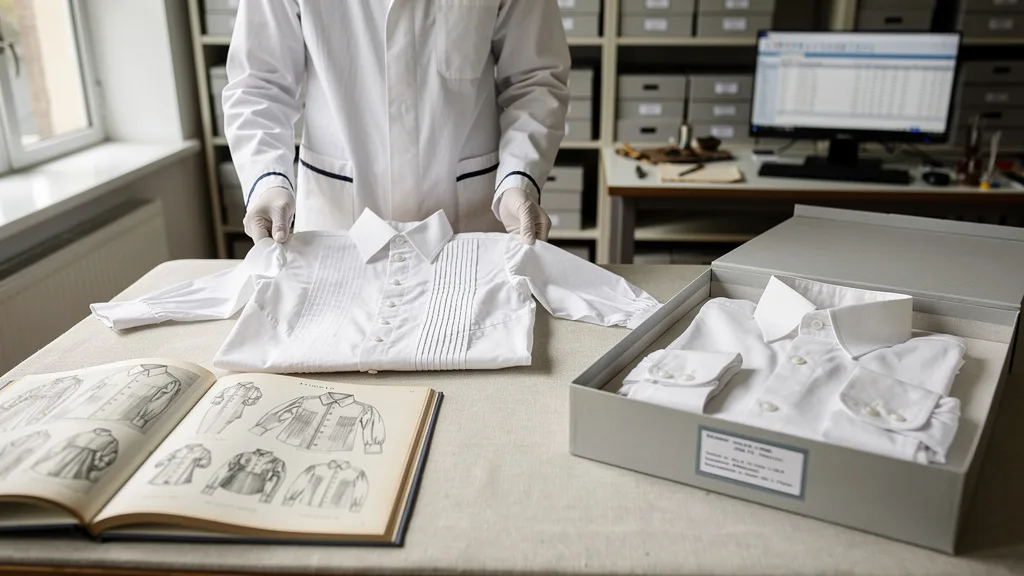
This era placed immense value on a polished and uncreased appearance. The shirt itself was often a simple pullover style, but its visible elements, the collar, cuffs, and front bib, were the focus of all attention. The sheer impracticality of these garments was the point; they were a testament to a lifestyle that was far removed from the dirt and grime of the industrial world, a key part of the strict Victorian dress code.
Detachable Collars and Cuffs
Perhaps the most defining feature of the Victorian shirt was the detachable collar and cuffs. This innovation was born from practicality. Since the main body of the shirt was hidden beneath a waistcoat and jacket, it did not get dirty as quickly as the exposed collar and cuffs. Detachable pieces allowed a man to change them daily without needing to launder the entire shirt, a costly and labor-intensive process at the time.
These collars were engineering marvels of discomfort. Made from cotton or linen, they were starched to an almost board-like stiffness and could stand several inches high, forcing the wearer to maintain an upright, ‘stiff-upper-lip’ posture. Styles varied, from the straight-sided ‘choker’ collar to the popular winged collar, which is still seen today with white-tie formalwear. They were attached to the shirt’s neckband with studs, a system that required a bit of dexterity to manage.
Fabrics, Weaves, and Starching Techniques
The fabric of choice for formal Victorian shirts was almost exclusively white cotton or linen. The whiteness itself was a status symbol, as keeping fabric white required significant effort and expense before modern detergents. The classic white formal shirt was a powerful social emblem, as detailed in academic studies on clothing history. The shirt front, or bib, was often made of a finer, more densely woven material like piqué or marcella to better hold the heavy starching.
Starching was an art form. The goal was to create a bib, collar, and cuffs that were as smooth, glossy, and rigid as possible, often referred to as a ‘boiled front’. This involved applying multiple layers of starch and polishing the surface with specialized irons. The result was a shirt front that was completely inflexible, presenting a perfect, unblemished facade to the world. It was the visual representation of Victorian propriety and control.
The Full-Bodied Silhouette and Fit
Beneath the waistcoat, the body of the Victorian shirt was far from tailored. It was typically a voluminous, full-cut garment, often gathered at the back yoke. This loose fit was necessary because the shirt was a pullover, lacking the full button-front placket we are familiar with today. The extra fabric provided room for movement, but it was entirely concealed from public view.
The focus was not on the fit of the shirt’s body but on the perfect presentation of its front. The stiff bib lay flat against the chest, held in place by the waistcoat. This construction created a very structured and somewhat artificial torso shape, prioritizing the outward appearance of formality over the wearer’s actual comfort. This silhouette stands in stark contrast to the more natural lines that would emerge in the following decade.
The Edwardian Formal Shirt: The Dawn of Modern Comfort
The Edwardian era, spanning roughly from 2026, ushered in a new, more relaxed approach to men’s fashion. While formality was still paramount, the rigid constraints of the Victorian age began to soften. This shift was perfectly captured in the evolution of the men’s shirt. Comfort and practicality started to gain ground, reflecting the changing lifestyle of the modern man who was increasingly engaging in sports and other leisure activities.
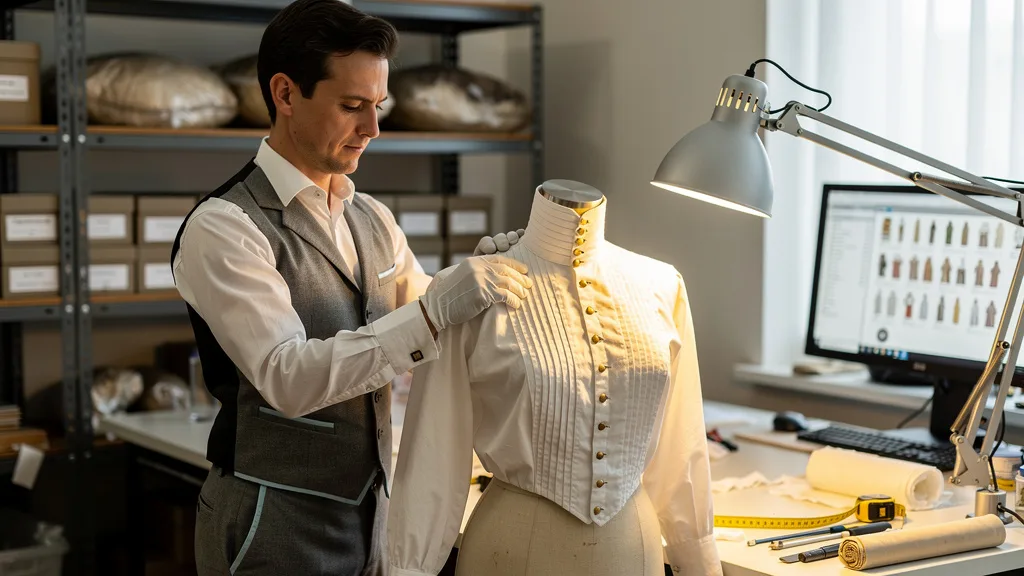
This period saw the gradual decline of the armor-like starched bib and the impossibly high collar. While still considered formal, the Edwardian men’s shirts were designed for a greater range of motion and ease of wear. This transition laid the groundwork for the dress shirt as we know it today, balancing elegance with a newfound sense of personal comfort. You can learn more about the broader trends of this era from resources covering Mens Edwardian Clothing (1890s-1920s).
The Rise of the Attached Turndown Collar
One of the most significant changes in the 1900s men’s shirts was the growing popularity of the attached collar. While detachable collars were still common, especially for the most formal occasions, a softer, attached turndown collar became the new standard for daywear. This collar was not as heavily starched and sat lower on the neck, offering a dramatic increase in comfort.
This style was seen as slightly less formal but infinitely more practical. It moved with the wearer and didn’t require the complex stud system of its predecessor. The emergence of the attached collar signaled a major shift in priorities: for the first time in formalwear, the wearer’s comfort was beginning to be considered as important as his appearance. This innovation paved the way for the variety of collar styles we see in modern menswear.
Lighter Materials and More Subtle Patterns
While white remained the standard for formal occasions, Edwardian day shirts began to embrace color and pattern. Stripes were particularly popular, often in subtle shades of blue, grey, or lavender on a white background. These patterns were considered smart and modern, suitable for the office or a weekend outing. The fabrics also became lighter, with less emphasis on the heavy, starched piqué of the Victorian era.
This introduction of color and pattern into men’s shirting reflected a more relaxed social atmosphere. It allowed for a degree of personal expression that was absent in the uniform-like white shirts of the previous generation. For those seeking modern inspiration, exploring the best premium shirts for summer can show how lightweight fabrics continue to define seasonal style, a trend that has its roots in this very period.
A Slimmer, More Natural Fit for the Active Man
The full, billowy cut of the Victorian shirt gave way to a slimmer, more tailored silhouette in the Edwardian era. This was partly due to the decline of the waistcoat in some less formal settings and the rise of the full button-front shirt, which made a trimmer fit more practical. This new cut followed the natural lines of the body, a radical departure from the artificial shape created by the Victorian boiled front.
This change was directly influenced by the growing importance of sports like tennis, golf, and cycling. An active lifestyle required clothing that allowed for freedom of movement. The slimmer, less cumbersome Edwardian shirt was a direct response to this need, creating a look that was both athletic and elegant. This emphasis on a good fit that allows for comfort is still a core principle of quality menswear, seen in the search for the best regular-fit shirts for everyday comfort.
Victorian vs Edwardian Shirts: Key Differences at a Glance
The transition from the 19th to the 20th century brought about a dramatic shift in menswear, and nowhere is this more evident than in the formal shirt. While separated by only a few years, the philosophies behind Victorian and Edwardian shirts were worlds apart. The Victorian shirt was a rigid symbol of status, while the Edwardian shirt was the beginning of modern comfort and personal style.
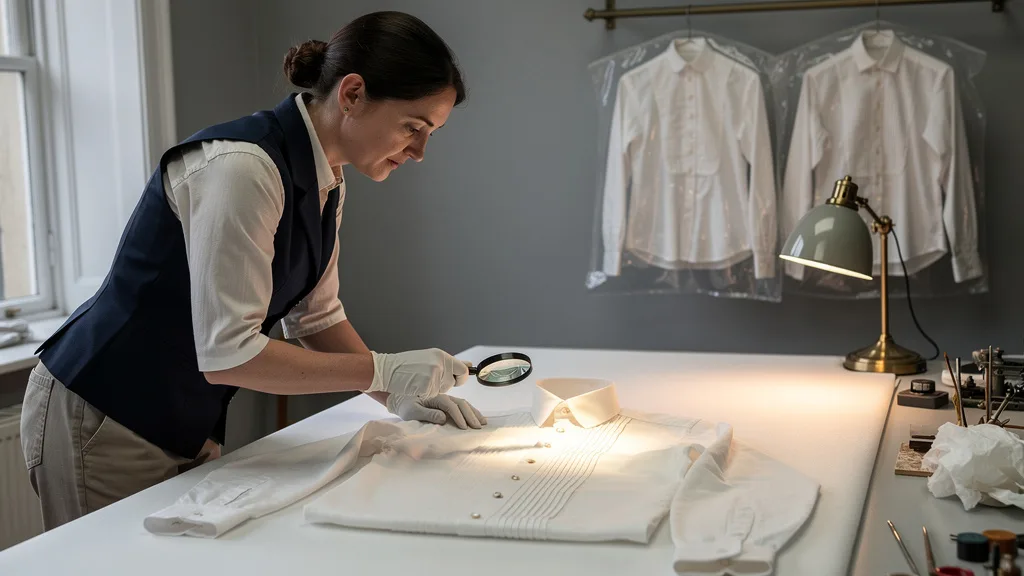
Understanding these differences helps to appreciate the rapid social and technological changes of the time. The move away from stiff, impractical garments towards more functional and comfortable clothing reflects a broader cultural shift. Below is a table that breaks down the key distinctions in formality, collar styles, and accepted colors and patterns between the two eras.
| Feature | Victorian Era (c. 1870-1900) | Edwardian Era (c. 2026) |
|---|---|---|
| Collar Style | Detachable, very high, and heavily starched. Wingtip and straight ‘choker’ styles were common. | Attached turndown collars gained popularity. Detachable collars were still used but were often lower and softer. |
| Starch Level | Extremely high. The ‘boiled front’ bib was stiff as a board. | Moderate. Starch was still used, but shirts were generally softer and more pliable. |
| Fit & Silhouette | Full, voluminous body hidden under a waistcoat. Artificial, flat-fronted torso shape. | Slimmer, more natural fit that followed the body’s lines. |
| Colors & Patterns | Almost exclusively solid white for formal and semiformal dress. | Stripes and subtle colors (light blue, grey, lavender) became acceptable for daywear and business. |
| Primary Goal | To display status, wealth, and adherence to strict social codes. Impracticality was a feature. | To balance formality with growing demands for comfort, practicality, and personal expression. |
Formality and Social Context
In the Victorian era, formality was absolute and non-negotiable. The white shirt with its starched front was a uniform for the upper and middle classes, a clear dividing line between the gentleman and the laborer. Any deviation from this standard was a serious social misstep. The clothing was designed to reinforce a rigid social hierarchy, with every detail communicating one’s place in the world.
The Edwardian era saw a slight relaxation of these strict codes. While white tie and black tie events still demanded high formality, a new category of ‘lounge’ or business dress emerged. For this, the colored and striped shirts were perfectly acceptable. This reflected a society where social mobility was becoming more common and the lines between the aristocracy and the new professional class were beginning to blur.
Collar Shapes and Heights
Collar shapes are one of the clearest indicators of the era. The Victorian period is defined by its towering collars, which could reach heights of three inches or more. These ‘choker’ collars severely restricted head movement and were a key component of the era’s upright, formal posture. The winged collar, which allowed a bit more room for the chin, was popular for evening wear but was equally stiff.
Edwardian collars, in contrast, began their journey back towards the neck. The soft turndown collar became the daytime standard, offering unprecedented comfort. Even the detachable collars that remained in use for formal occasions became slightly lower and less aggressively starched as the decade progressed. This evolution in collar shapes was a direct response to men’s desire for less restrictive clothing.
Color Palettes and Acceptable Patterns
The Victorian color palette for formal shirts was simple: white. For the most formal events, there was no other option. This was a direct display of wealth, as keeping a shirt pristine white was a challenge. Any color was seen as informal and associated with sportswear or rural life, entirely unsuitable for a gentleman in the city.
The Edwardians introduced a more varied palette. While white was still required for evening wear, colored stripes became fashionable for business and leisure. These styles colors patterns were typically subtle and refined, such as fine blue, pink, or grey lines on a white ground. This was a significant step towards the diverse range of colors and patterns available in men’s shirting today, where a modern grey shirt combination guide offers endless possibilities.
The Great Transition: Why Men’s Shirts Evolved After 1900
The dramatic change in men’s formal shirts around the turn of the 20th century was not a random whim of fashion. It was driven by powerful social, technological, and cultural forces that were reshaping the Western world. The shift from the Victorian shirt to the Edwardian shirt is a case study in how clothing adapts to meet the needs of a changing society.
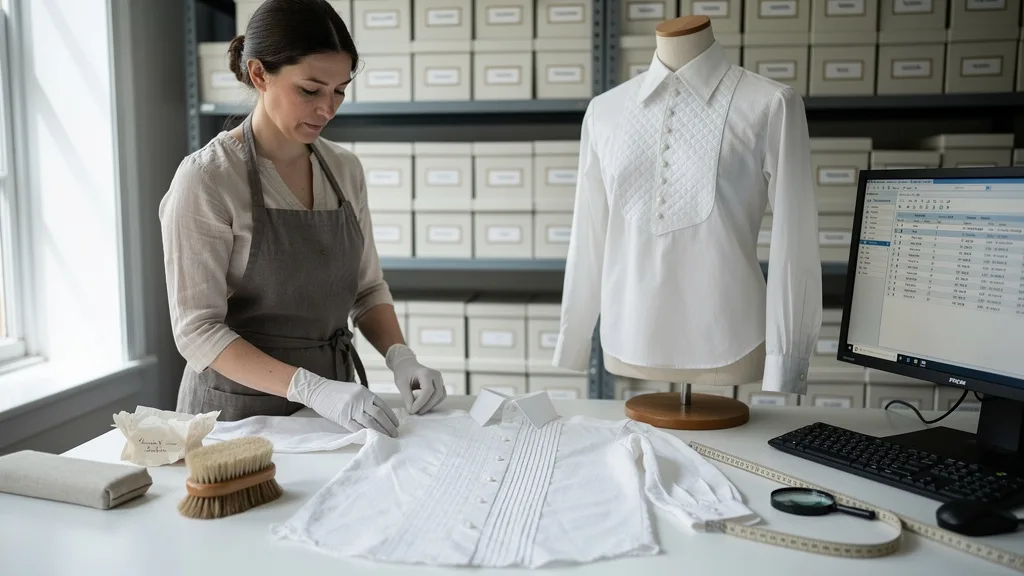
From the rise of leisure time to innovations in laundry, several key factors conspired to liberate men from the ‘starched straightjacket’ of the 19th century. This evolution was about more than just comfort; it was about the emergence of a new ideal of masculinity that valued activity, efficiency, and a more relaxed form of elegance. The shirt history of this period is the story of modernity itself.
Influence of Sport and Leisure Activities
One of the most significant drivers of change was the explosion of interest in sports and leisure among the middle and upper classes. Activities like tennis, golf, rowing, and bicycling became immensely popular. The restrictive formalwear of the Victorian era was completely impractical for any kind of physical exertion.
Men required clothing that allowed for freedom of movement, and the soft-collared, lighter-weight shirt was the answer. Initially worn only for sport, the comfort of these garments was so appealing that they began to creep into everyday wear. The image of the athletic, active gentleman began to replace the staid, sedentary ideal of the Victorian patriarch, and fashion evolved to match.
Technological Advances in Laundry and Textiles
The detachable collar was partly a solution to the difficulty of laundering clothes. However, the late 19th and early 20th centuries saw significant advances in domestic technology. The invention of more effective washing machines and better detergents made it easier and cheaper to clean an entire shirt. This reduced the practical need for detachable components.
Simultaneously, textile manufacturing was improving. Mills could produce finer, lighter cottons that were still durable. These new fabrics were more comfortable against the skin and didn’t require the heavy starching of their predecessors to look presentable. Technology made the comfortable shirt not only desirable but also practical and affordable for a wider population.
Shifting Social Hierarchies and Dress Codes
The Edwardian era was a time of social flux. The old aristocracy’s influence was waning, and a new, powerful class of industrialists, financiers, and professionals was on the rise. This new elite was often self-made and valued efficiency and modernity over the rigid traditions of the old guard. Their dress reflected this mindset.
The stiff, formal shirt was seen as a relic of an older, more rigid time. The newer, softer shirt styles were associated with the forward-thinking, dynamic man of the 20th century. As the office replaced the country estate as the center of power, business dress became the new standard, and it demanded a look that was smart and professional yet practical enough for a day’s work.
Wearing History: Incorporating Classic Styles in 2026
The elegance of the late Victorian and Edwardian eras continues to inspire menswear in 2026. While you might not want to adopt a fully starched bib for your next board meeting, there are many ways to incorporate the sophisticated details of these historical garments into a contemporary wardrobe. It’s about capturing the spirit of that refined era without sacrificing modern comfort.
By understanding the key elements like collar shapes and fit, you can add a touch of vintage charm to your look. Whether for a wedding, a formal event, or simply to elevate your daily style, these classic influences can provide a unique and distinguished alternative to mainstream fashion. The key is to blend historical details with modern tailoring.
“The formal shirt’s journey from Victorian rigidity to Edwardian ease is a lesson in how fashion always follows function. As men’s lives became more active and their social roles more varied, the shirt had to adapt. Today, we reap the benefits of that evolution, enjoying shirts that are both stylish and comfortable, a legacy of the great transition a century ago.”
Choosing the Right Collar for a Vintage Look
The collar is the easiest way to channel a vintage aesthetic. For a subtle nod to the era, consider a club collar, a soft, rounded style that became popular in the 1910s and 20s. It offers a unique, slightly less formal look that pairs well with blazers and smart trousers. For a more formal event, a classic detachable wingtip collar worn with a tuxedo is a direct link back to the Gilded Age.
Another option is the spearpoint collar, which has long, pointed ends and became popular just after the Edwardian period. It has a dramatic look that works well without a tie or with a loosely knotted one. When choosing a vintage-inspired collar, ensure the rest of the shirt has a modern, slim fit to avoid looking like you’re wearing a costume.
Pairing with Modern Suits and Semiformal Dress
Incorporating a historical shirt style into a modern ensemble is all about balance. A shirt with a more distinct collar, like a high stand collar or a club collar, should be paired with a simple, well-tailored suit. Let the shirt be the focal point. Stick to classic suit colors like navy, charcoal, or grey to maintain a sophisticated look.
For a semiformal dress code, you can be more playful. A striped Edwardian-style shirt with an attached turndown collar can look exceptionally sharp with a tweed blazer and chinos. The key is to ensure the fit of every garment is impeccable. The structured look of the past combined with the slim, clean lines of modern tailoring creates a powerful and stylish statement.
Finding Quality Reproductions and Inspired Pieces
Today, many premium brands offer shirts inspired by these historical periods. Look for labels that focus on high-quality materials like long-staple cotton and pay attention to details like mother-of-pearl buttons and fine stitching. These brands understand how to translate historical designs into wearable, contemporary garments.
When shopping, pay close attention to the collar construction and the fabric weave. A quality reproduction will have a collar that stands correctly without excessive starch and will be made from a comfortable, breathable fabric. Avoiding common pitfalls is crucial, and understanding the 5 common mistakes when buying premium shirts can help you invest in a piece that you’ll cherish for years. The goal is to find a shirt that captures the historical essence while meeting modern standards of quality and comfort.
Key Takeaways
The evolution of men’s formal shirts from the Victorian to the Edwardian era offers a clear window into the changing tides of society, technology, and style. Here are the most important points to remember:
- Victorian Shirts Were About Status: The defining features were the extremely stiff, detachable collar and starched bib. This impractical design was a deliberate symbol of wealth and a sedentary lifestyle.
- Edwardian Shirts Embraced Comfort: This era saw the rise of the softer, attached turndown collar, lighter fabrics, and a slimmer, more natural fit, driven by the growing popularity of sports and leisure.
- Collars Tell the Story: The most visible difference is the collar. Victorian collars were high, stiff, and detachable, forcing an upright posture. Edwardian collars were lower, softer, and often attached, prioritizing comfort.
- Color and Pattern Arrived: While Victorian formal shirts were almost exclusively white, the Edwardian period introduced subtle stripes and colors for daytime and business wear, marking a step towards personal expression.
- The Shift Was Driven by Modernity: The change wasn’t just a fashion trend. It was a result of new technologies (laundry, textiles), new social structures (a rising professional class), and new lifestyles (the active man).
Frequently Asked Questions
What is the main difference between Victorian and Edwardian men’s fashion?
The main difference lies in silhouette and formality. Victorian fashion was rigid, ornate, and structured, characterized by heavy fabrics, dark colors, and restrictive garments like high-collared shirts and corsetry. Edwardian fashion, while still formal, moved towards a lighter, more natural silhouette with more comfortable fabrics, reflecting a greater emphasis on activity and leisure.
For men, this meant the transition from the stiff, board-like shirt fronts and towering collars of the 1890s to the softer, attached-collar shirts and more relaxed suits of the 1900s. The Edwardian era was a bridge between the stiff formality of the 19th century and the true modernity of the 20th century.
What was the first shirt ever made?
The earliest known shirt is the Tarkhan Dress, discovered in an Egyptian tomb and dating back to around 3000 B.C. Made of linen, it is a remarkably sophisticated garment with tailored sleeves and a pleated body, suggesting a long history of garment construction even at that early date. For much of history, the shirt was considered an undergarment.
It was a simple tunic-like piece worn next to the skin by both men and women. It wasn’t until much later, around the 18th and 19th centuries, that the visible parts of the shirt, like the collar and cuffs, became decorative elements and status symbols in their own right, leading to the formal shirts of the Victorian era.
Were formal shirts always white during these eras?
For the most formal occasions, yes. In both the Victorian and Edwardian periods, a pure white shirt was non-negotiable for evening wear (white tie). The whiteness symbolized purity, wealth, and the fact that the wearer did not engage in manual labor. It was the ultimate statement of a gentleman’s status.
However, during the Edwardian era, colored and striped shirts became acceptable for less formal daytime activities, such as business or leisure. These were typically subtle patterns on a white background. This was a significant departure from the Victorian era, where any color in a shirt would have been considered highly informal.
What is a ‘boiled front’ on a formal shirt?
A ‘boiled front’ refers to the heavily starched bib, or bosom, of a Victorian formal shirt. The term comes from the process of laundering and starching, where the shirt front was treated with a thick starch solution and then polished with hot irons to create an intensely hard, glossy, and smooth surface that resembled porcelain or celluloid.
This rigid panel ensured a perfectly flat, uncreased appearance under a waistcoat, projecting an image of extreme neatness and formality. It was incredibly stiff and often uncomfortable, but it was the hallmark of a gentleman’s evening shirt throughout the late 19th century.
How did men’s shirt collar shapes change from the 1890s to the 1910s?
The change was dramatic, moving from extreme height and stiffness to relative softness and comfort. In the 1890s (late Victorian), collars were detachable, very high (often 3 inches or more), and heavily starched into styles like the ‘choker’ or the winged collar. They were designed to force the head up and create a formal, rigid posture.
By the 1910s (late Edwardian/early modern), the attached turndown collar had become dominant for daywear. It was much lower, softer, and required little to no starch. While detachable collars were still worn for formal events, they too had become lower and less aggressive, signaling a major shift in menswear priorities towards comfort and practicality.
Conclusion
The journey of the formal shirt from the Victorian era to the Edwardian era is more than a footnote in fashion history; it’s a reflection of a world in transition. We’ve seen how the shirt evolved from a rigid status symbol, defined by its starched front and high detachable collar, into a garment that began to prioritize the comfort and active lifestyle of the modern man. This change was not arbitrary but a direct response to new technologies, shifting social norms, and the rising importance of leisure.
The key takeaways are clear: the Victorian shirt was about displaying a static, wealthy position in a rigid society, while the Edwardian shirt was about navigating a more dynamic world with elegance and practicality. The introduction of softer collars, lighter fabrics, and subtle patterns laid the essential groundwork for the versatile men’s dress shirt we know today. Understanding this history allows you to appreciate the comfort and style choices available in 2026.
By learning from the past, you can make more informed and stylish choices for your own wardrobe. Whether you’re drawn to the classicism of a crisp white shirt or the subtle personality of a patterned one, you are participating in a long history of men’s style. The principles of balancing formality, comfort, and personal expression that emerged over a century ago are still the cornerstones of great dressing.
Ready to find a shirt that perfectly blends timeless style with modern craftsmanship? Explore our curated collection of premium shirts for every occasion, crafted with the finest materials and an expert eye for detail. Find your perfect fit and elevate your wardrobe today. SHOP NOW.