


What Goes Into the Real Cost of a Premium Shirt in 2026
Have you ever wondered why one premium shirt costs $15 to make while another costs $45? The difference is rarely a single factor. It is a combination of fabric choice, production volume, decoration method, and logistics that together determine The True Cost of a Premium Shirt in 2026. This guide breaks down each layer so you can price your clothing line with confidence.
Every brand owner needs to understand that the sticker price on a shirt is only the beginning. The real cost includes raw materials, labor, overhead, shipping, and the hidden fees that eat into profit. By the end of this article, you will know exactly how to calculate your true cost per shirt and set prices that sustain your business.
Fabric Quality and GSM
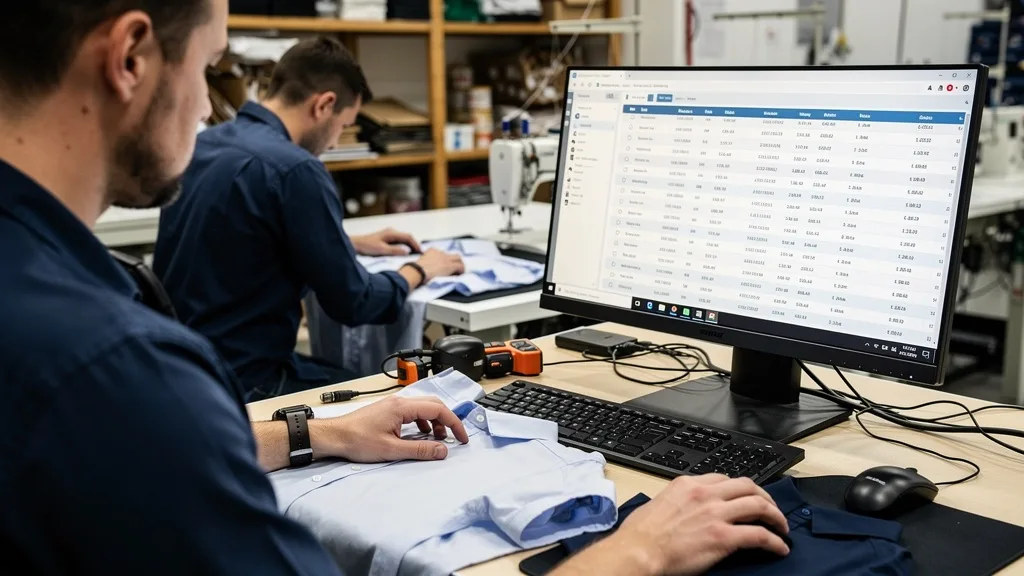
Fabric is the single largest cost component in any premium shirt. The weight of the fabric, measured in grams per square meter (GSM), directly affects both the feel and the price. A standard 160 GSM cotton shirt costs less than a 220 GSM heavyweight jersey because more fiber is used per square meter. For premium shirts, brands often choose 180 to 220 GSM for a substantial drape and durability.
Beyond GSM, the fiber type matters enormously. Organic cotton, pima cotton, bamboo blends, and performance synthetics each carry different price tags. Organic cotton can cost 20 to 50 percent more than conventional cotton due to certification and farming practices. If you are targeting a luxury market, investing in higher GSM and premium fibers is non-negotiable for the hand feel and longevity customers expect.
Your choice of fabric also determines how the shirt behaves after washing. A low-GSM shirt may shrink or lose shape faster, leading to returns and unhappy customers. Spending a little more on quality fabric upfront reduces long-term costs and builds brand reputation. Always request a fabric swatch and test wash before committing to a bulk order.
Printing Method and MOQ
The printing method you choose dramatically changes the cost per shirt. Screen printing remains the most economical for large runs, with setup fees spread across hundreds of units. However, for small batches or multi-color designs, direct-to-garment (DTG) or direct-to-film (DTF) printing may be cheaper despite higher per-unit costs. Each method has a different minimum order quantity (MOQ) that affects your upfront investment.
MOQ is a critical factor in The True Cost of a Premium Shirt in 2026. A manufacturer may require 100 pieces per design per color. If you only need 50 shirts, you still pay for 100. That extra inventory ties up cash and increases storage costs. Some print-on-demand services eliminate MOQ but charge a premium per shirt, which can work for testing designs but limits profit margins at scale.
To optimize costs, plan your collection around a few core designs with high MOQ potential. Combine multiple small orders into one larger run to negotiate better per-unit pricing. Always ask your supplier for a breakdown of setup fees, screen charges, and per-piece costs before signing a contract.
Packaging and Shipping
Packaging is often overlooked but adds real dollars to each shirt. A poly bag costs pennies, but a branded box with tissue paper and a thank-you card can add $2 to $5 per unit. For premium brands, unboxing experience matters. However, you must balance presentation with cost. Consider using eco-friendly mailers that are both attractive and lightweight to keep shipping expenses down.
Shipping costs vary wildly based on origin, destination, and speed. A shirt manufactured in China and shipped to the US via sea freight may cost $0.50 per unit in containerized shipping, while air freight can be $3 to $5 per shirt. Domestic production, such as in the US or Pakistan, reduces shipping time and cost but may increase fabric and labor expenses. Use a total landed cost calculator to compare all options.
Don’t forget duties and customs fees. Importing shirts into certain countries can add 10 to 25 percent in tariffs. These fees are often paid after the fact, catching new brands off guard. Factor in a buffer of 5 to 10 percent of your product cost for unexpected logistics charges.
Payment Processing and Hidden Fees
Every time a customer buys your shirt, payment processors take a cut. Stripe, PayPal, and Square typically charge 2.9 percent plus $0.30 per transaction. For a $50 shirt, that is about $1.75 in fees. If you offer international payments or currency conversion, those fees can double. These small percentages add up quickly across hundreds of orders.
Other hidden fees include chargebacks, refund processing, and platform commissions if you sell on marketplaces like Amazon or Etsy. Etsy charges a listing fee, transaction fee, and payment processing fee that together can consume 10 to 15 percent of your revenue. Build these costs into your pricing model from day one so you are not surprised at the end of the month.
Finally, consider the cost of returns. Premium shirts have a higher return rate if sizing is off. Offering free returns is a competitive necessity, but it eats into margin. Use detailed size charts, fit guides, and customer reviews to minimize returns. A 5 percent return rate can reduce your net profit by 10 percent or more.
How to Calculate Your True Cost Per Shirt
Calculating your true cost per shirt is not as simple as adding up material and labor. You must include every expense from design to delivery. This section provides a clear formula and highlights common mistakes that inflate costs without you realizing it.
Total Landed Cost Formula
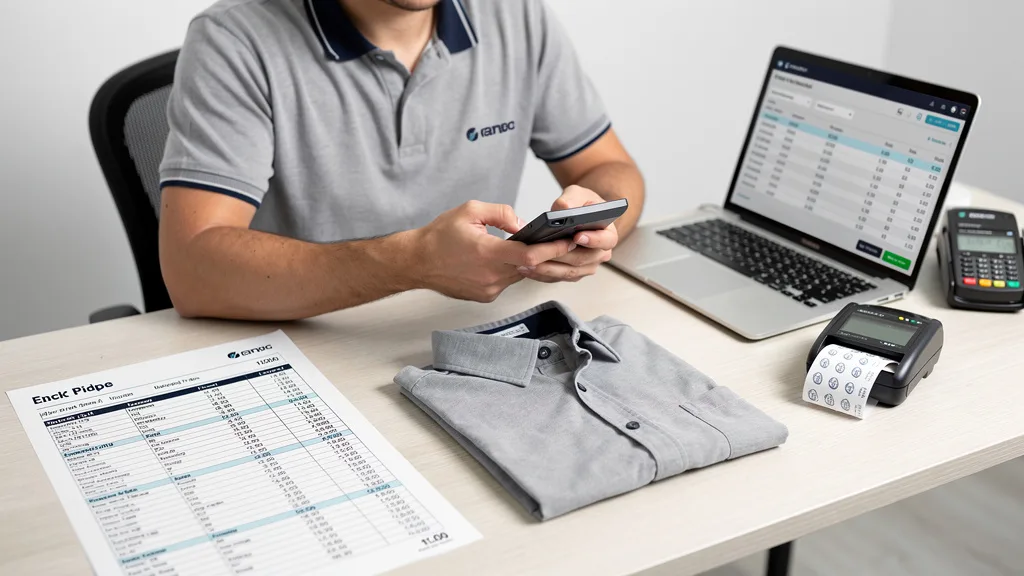
The total landed cost (TLC) is the sum of all expenses incurred to get one shirt into your customer’s hands. Use this formula: TLC = (Fabric Cost + Trim Cost + Labor Cost + Printing Cost) + (Packaging Cost + Shipping Cost + Duties + Insurance) + (Payment Processing Fees + Platform Fees + Returns Allowance). Each component must be calculated per unit based on your order quantity.
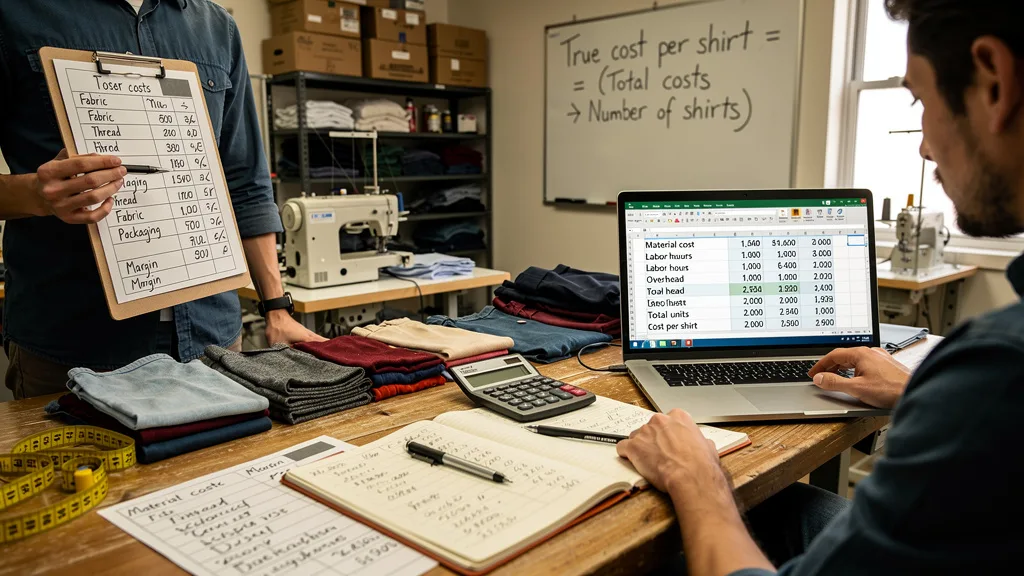
For example, if your fabric costs $8 per shirt, trim $1, labor $3, printing $2, packaging $1, shipping $2, duties $1, and fees $1.50, your TLC is $19.50 per shirt. If you sell at $50, your gross profit is $30.50 before overhead like rent, marketing, and salaries. Always calculate TLC before setting your retail price to ensure you have room for profit.
Use a spreadsheet to track every cost line item. Update it each time you change suppliers or materials. Many brands use a 2x or 2.5x multiplier on TLC to arrive at a wholesale price and 4x to 5x for retail. However, those multipliers only work if your TLC is accurate.
Common Costing Mistakes to Avoid
The biggest mistake new brand owners make is forgetting to include their own time. Design, sourcing, quality control, and customer service are real costs. If you pay yourself $25 per hour and spend 10 hours on a 100-shirt order, that is $2.50 per shirt in hidden labor. Treat your time as a cost, not free work.
Another common error is underestimating shipping costs for international orders. A quote from a freight forwarder may not include fuel surcharges, handling fees, or last-mile delivery. Always ask for a full breakdown and add 10 percent for contingencies. Similarly, many brands forget to account for sample costs. Samples can cost $50 to $150 each, and you may need two or three rounds before production.
Finally, do not ignore the cost of deadstock. Unsold inventory ties up capital and may eventually be sold at a loss. Plan your initial order quantities conservatively and use pre-orders or small batch runs to validate demand before committing to large MOQs.
Understanding Margin vs Markup for Shirt Pricing
Margin and markup are often used interchangeably but they mean different things. Margin is the percentage of the selling price that is profit. Markup is the percentage added to the cost to arrive at the selling price. Confusing the two can lead to pricing that either leaves money on the table or scares away customers.
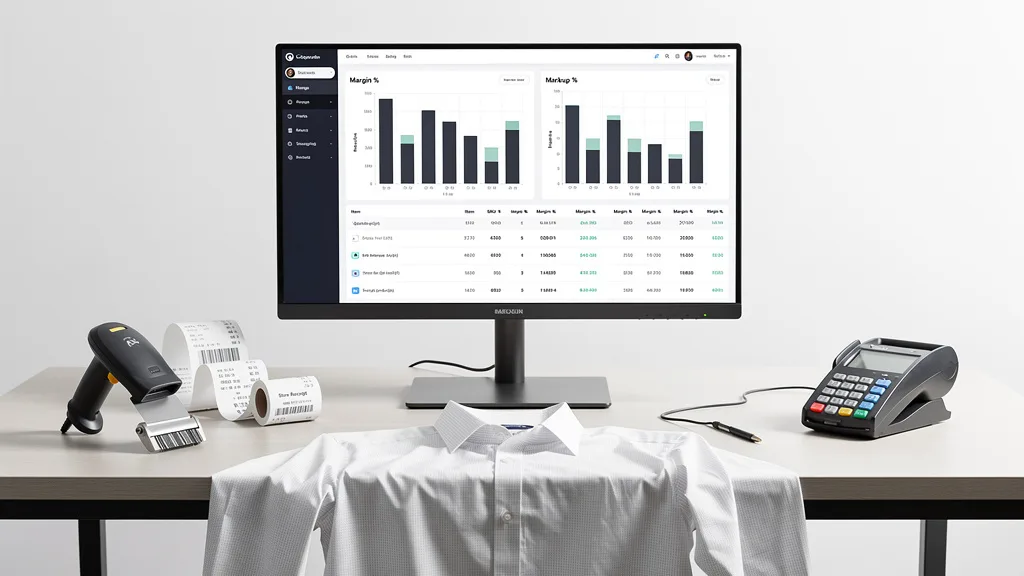
For example, if your shirt costs $20 and you want a 50 percent margin, the selling price must be $40. That is a 100 percent markup on cost. If you instead apply a 50 percent markup, the price is $30, giving you only a 33 percent margin. Use a margin calculator to avoid this mistake. Most premium apparel brands target a 55 to 65 percent gross margin to cover overhead and generate profit.
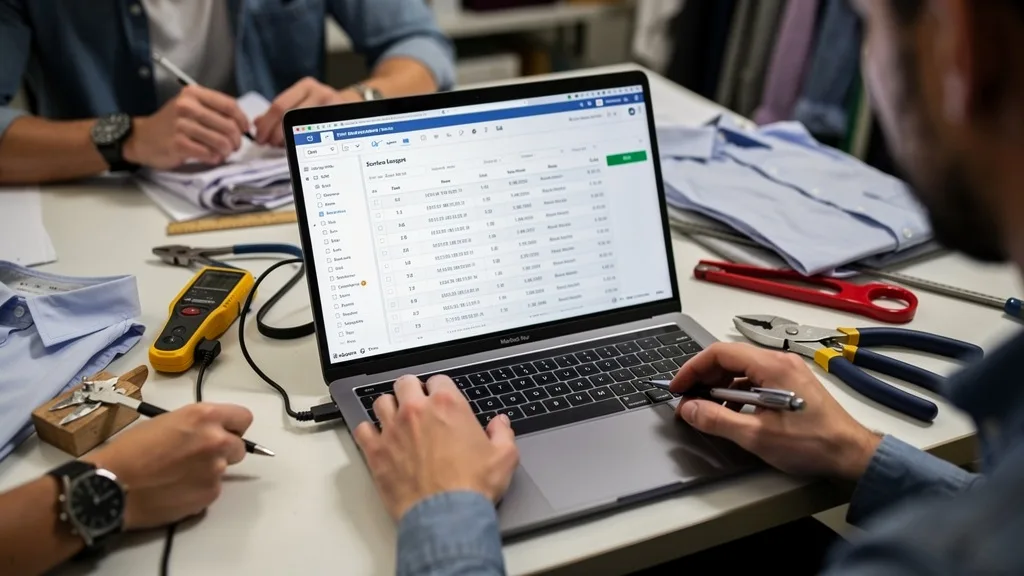
When setting prices, always start with your desired margin, not a random markup. Decide what profit percentage you need to sustain your business, then work backward to the price. This approach ensures you are not accidentally underpricing your premium shirts.
Pricing Formula for a Premium Shirt in 2026
Setting the right price for a premium shirt requires a clear formula that accounts for all costs and desired profit. This section walks through a real example and explains how to adjust for different sales channels.

Retail Price Calculation Example
Let’s say your total landed cost per shirt is $22. You want a 60 percent gross margin. The formula is: Retail Price = Cost / (1 – Desired Margin). So $22 / (1 – 0.60) = $22 / 0.40 = $55. Your retail price should be $55. At that price, your gross profit per shirt is $33, which covers marketing, rent, salaries, and leaves room for net profit.
If you sell through a retailer or marketplace that takes a 30 percent commission, you need to adjust. The effective margin after commission is 60% – 30% = 30%. To maintain a 30 percent net margin, your retail price to the end customer must be higher, or you must reduce your cost. Many brands set a manufacturer’s suggested retail price (MSRP) that accounts for channel margins.
Always test your pricing with a small audience before launching. Use surveys or pre-orders to gauge willingness to pay. A premium shirt at $55 may sell well if the perceived value matches the price. If customers hesitate, revisit your cost structure or value proposition.
Adjusting for Wholesale and Retail Channels
Wholesale pricing is typically half of retail. If your retail price is $55, your wholesale price to boutiques or department stores should be around $27.50. That gives the retailer a 50 percent margin to cover their own costs. Your wholesale price must still be above your total landed cost to make a profit. In this example, $27.50 wholesale gives you a gross margin of about 20 percent, which may be too low unless you sell high volumes.
To improve wholesale margins, reduce your cost per shirt by ordering larger quantities or negotiating better fabric prices. Alternatively, focus on direct-to-consumer (D2C) sales where you keep the full retail margin. Many premium brands start D2C and later add wholesale as a growth channel once they have economies of scale.
For online marketplaces like Amazon or Etsy, factor in their fees when setting your price. If Amazon takes 15 percent, your effective selling price is 85 percent of the listed price. Adjust your retail price upward so that after fees, you still hit your target margin.
Cost Breakdown by Production Method
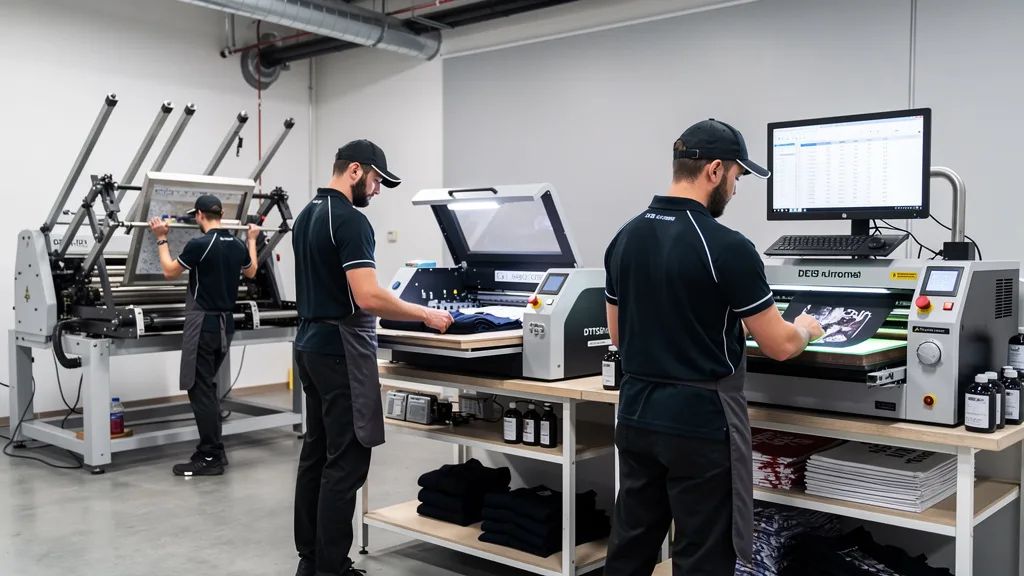
The production method you choose directly impacts your cost per shirt. Each technique has different setup costs, per-unit costs, and minimum order requirements. Below is a comparison of the most common methods for premium shirts in 2026.
| Method | Setup Cost | Per Unit Cost (1 color) | MOQ | Best For |
|---|---|---|---|---|
| Screen Printing | $50-$150 per screen | $2-$5 | 50-100 pieces | Large runs, simple designs |
| DTG (Direct to Garment) | Low (no screens) | $5-$12 | 1 piece | Small batches, photo-realistic |
| DTF (Direct to Film) | Low (film transfer) | $4-$10 | 10-20 pieces | Multi-color, small runs |
| Sublimation | Low (print and press) | $4-$8 | 1 piece | All-over prints, polyester fabrics |
Screen Printing Costs
Screen printing is the traditional choice for high-volume production. The setup cost per screen can be $50 to $150, and each color requires a separate screen. For a three-color design, you might pay $300 in setup before printing a single shirt. However, the per-unit cost drops significantly as quantity increases. At 500 shirts, the setup cost per shirt is negligible.
Screen printing works best on cotton and cotton-blend fabrics. The ink sits on top of the fabric, creating a durable, vibrant print. For premium shirts, screen printing offers the best cost per unit at scale, but the high MOQ can be a barrier for new brands. If you are starting small, consider sharing a production run with another brand or using a print-on-demand service for initial tests.
One hidden cost in screen printing is color separation and art preparation. If your design is complex, you may need to pay a graphic designer $50 to $200 to prepare the files. Factor this into your setup budget.
DTG and DTF Printing Costs
Direct-to-garment (DTG) printing works like an inkjet printer on fabric. There are no screens, so setup costs are near zero. Per-unit costs are higher, typically $5 to $12 for a full-color design. DTG is ideal for small batches, custom orders, and designs with many colors or gradients. The print quality is excellent on 100 percent cotton shirts.
Direct-to-film (DTF) printing is a newer method that transfers a design from a film to the fabric using heat. It works on cotton, polyester, and blends. DTF has a slightly lower per-unit cost than DTG for multi-color designs and offers better durability on dark fabrics. The MOQ is usually 10 to 20 pieces, making it a good middle ground between screen printing and DTG.
Both DTG and DTF require specialized equipment and pretreatment for dark garments. If you outsource to a print shop, these costs are included in their per-unit price. For in-house production, the initial investment in a DTG printer can be $10,000 to $30,000, which must be amortized across your shirt volume.
Sublimation Costs
Sublimation printing uses heat to transfer dye into polyester fibers. The result is a permanent, all-over print that does not crack or peel. Per-unit costs range from $4 to $8, with no setup fees and an MOQ of one piece. Sublimation is perfect for activewear, sports jerseys, and any design that covers the entire shirt.
The limitation of sublimation is that it only works on white or light-colored polyester fabrics. If you want a premium cotton shirt, sublimation is not an option. For polyester blends, however, sublimation offers the lowest per-unit cost for small runs and the highest design flexibility. Many brands use sublimation for limited edition drops or custom orders.
When calculating sublimation costs, remember that the fabric itself may be more expensive than cotton. Premium polyester blends with moisture-wicking properties can cost $10 to $15 per yard. Include fabric cost in your total landed cost calculation.
How Much Profit Can You Expect From a Premium Shirt
Profitability is the ultimate goal, but it varies widely based on your business model, volume, and pricing strategy. This section provides industry benchmarks and a real-world example to set realistic expectations.

Gross Margin Benchmarks for Clothing Brands
Industry benchmarks for apparel brands show that a healthy gross margin is between 50 and 65 percent. Luxury and premium brands often achieve 60 to 70 percent gross margins due to higher perceived value and pricing power. Fast fashion brands operate on thinner margins, around 40 to 50 percent, relying on volume.
Net profit margins after all expenses (marketing, rent, salaries, taxes) are typically 10 to 20 percent for established brands. New brands may see lower net margins in the first year as they invest in customer acquisition and inventory. The key is to monitor your gross margin closely and keep overhead low until you reach scale.
According to industry data, the average cost to produce a t-shirt in 2026 ranges from $8 to $25 depending on quality and origin. Premium shirts at the higher end of that range can still yield strong profits if priced correctly. Use the benchmarks above to set targets for your own brand.
“Understanding your true cost per shirt is the difference between a brand that thrives and one that struggles. Most new brands underestimate costs by 20 to 30 percent, which erodes their profit before they even start marketing.”
Real Profit Example for a Small Brand
Imagine a small brand that sells 500 premium shirts per month. Total landed cost per shirt is $22. Retail price is $55. Gross profit per shirt is $33. Monthly gross profit is $16,500. From that, subtract monthly overhead: rent $1,500, marketing $3,000, salaries $5,000, software and tools $500, shipping supplies $500. Total overhead is $10,500. Net profit is $6,000 per month, or about $11 per shirt.
That is a 20 percent net profit margin, which is healthy for a small brand. If the brand can reduce costs by negotiating better fabric pricing or increasing order volume to 1,000 shirts per month, net profit could double without doubling revenue. Scaling production is the most effective way to improve margins.
Remember that this example assumes no returns, no chargebacks, and consistent demand. In reality, you should budget for a 5 to 10 percent variance in costs and sales. Build a cash reserve to cover slow months.
Key Takeaways
- The True Cost of a Premium Shirt in 2026 includes fabric GSM, printing method, MOQ, packaging, shipping, and hidden fees like payment processing and returns.
- Use the total landed cost formula to calculate every expense per shirt before setting your price.
- Understand the difference between margin and markup to avoid underpricing your products.
- Choose a production method that matches your order volume and design complexity to optimize cost per shirt.
- Target a gross margin of 55 to 65 percent and a net profit margin of 10 to 20 percent for a sustainable business.
Frequently Asked Questions
What is the average cost to produce a premium shirt in 2026?
The average cost to produce a premium shirt in 2026 ranges from $15 to $35 per unit. This includes fabric, labor, printing, packaging, and shipping. The exact cost depends on fabric quality (GSM), order quantity, production method, and location. A shirt made with organic cotton and screen printed in the US will cost more than a similar shirt produced in bulk overseas.
How do I calculate the true cost of a shirt for my brand?
For a typical small brand ordering 100 to 500 shirts, expect a total landed cost of $20 to $28 per shirt. Higher volumes can reduce the per-unit cost by 15 to 25 percent. Always request quotes from multiple suppliers and compare the full breakdown, not just the per-piece price.
What is a good profit margin for selling premium shirts?
To calculate the true cost, add up every expense from design to delivery: fabric, trim, labor, printing, packaging, shipping, duties, insurance, payment processing fees, platform commissions, and a returns allowance. Divide the total by the number of shirts in your order. This is your total landed cost per shirt. Use this number to set your wholesale and retail prices.
How does MOQ affect the cost per shirt?
Do not forget to include your own time and overhead like rent and marketing. These are not part of the per-shirt cost but must be covered by your gross profit. A simple spreadsheet with all line items updated monthly will keep your costing accurate.
What hidden costs do new shirt brands often miss?
A good gross profit margin for premium shirts is 55 to 65 percent. This means your selling price should be 2.2 to 2.8 times your total landed cost. Net profit margin after all expenses should be 10 to 20 percent. New brands may start with lower net margins as they invest in growth, but aim for at least 15 percent net profit to build a sustainable business.
If your gross margin falls below 50 percent, review your cost structure. Can you negotiate better fabric prices? Increase order quantity? Reduce shipping costs? Small improvements in margin have a big impact on your bottom line over time.
MOQ (minimum order quantity) directly impacts your cost per shirt because setup fees and fixed costs are spread across fewer units. A screen printing setup fee of $300 divided by 50 shirts adds $6 per shirt. Divided by 500 shirts, it adds only $0.60 per shirt. Higher MOQs almost always lower the per-unit cost, but they also increase your upfront investment and inventory risk.
For new brands, consider starting with a lower MOQ method like DTG or DTF, even if the per-unit cost is higher. Once you validate demand, move to screen printing with larger MOQs to improve margins. Always negotiate MOQ with your supplier; some may offer flexibility for first-time orders.
New brands frequently miss payment processing fees (2.9% + $0.30 per transaction), platform commissions (10-15% on marketplaces), return shipping and restocking costs, sample development fees, and the cost of their own time. They also overlook duties and customs fees for international shipments, which can add 10 to 25 percent to the product cost.
Another hidden cost is marketing. You may need to spend 20 to 30 percent of your revenue on ads to acquire customers. If you do not include this in your pricing, you will run out of cash. Build a buffer of 10 percent of your total landed cost for unexpected expenses.
Conclusion
Understanding The True Cost of a Premium Shirt in 2026 is the foundation of a profitable apparel brand. From fabric GSM and printing methods to shipping and hidden fees, every cost layer must be calculated and monitored. By using the total landed cost formula and targeting a 55 to 65 percent gross margin, you can set prices that attract customers and sustain your business.
The most successful brands revisit their cost structure every quarter. They negotiate with suppliers, optimize their production methods, and adjust pricing as materials and shipping rates change. Whether you are launching your first collection or scaling an existing line, the principles in this guide will help you avoid common pitfalls and build a brand that lasts.
If you are ready to source premium shirts with transparent pricing and global shipping, explore our collection of premium shirts, kurtas, and suits. We offer breathable fabrics, intricate designs, and free shipping on orders over $150. SHOP NOW to see the quality for yourself.