

Have you ever hesitated to wear your beautiful Chikankari kurta, fearing you might ruin its intricate embroidery in the wash? This timeless form of needlework from Lucknow is a treasure, and with the right care, it can remain a staple in your wardrobe for years. Proper maintenance is key to preserving its graceful appeal and finely embroidered details.
To correctly wash and care for a Chikankari kurta at home, you should always opt for gentle hand washing in cold water with a mild detergent. Avoid vigorous scrubbing, twisting, or wringing the fabric, as this can damage the delicate threads. After washing, air-dry the garment in a shaded area away from direct sunlight and iron on the reverse side while it’s still slightly damp to protect the embroidery.
Pre-Wash Preparations for Your Chikankari Kurta
Before you begin the washing process, a few preparatory steps can make all the difference in protecting your garment. First, always check the care label provided by the manufacturer. While most Chikankari pieces require similar care, the base fabric, whether it’s cotton, georgette, or silk, might have specific requirements.
Next, if you are washing the kurta for the first time, perform a quick colorfastness test. Dab a small, hidden area, like an inner seam, with a wet cotton swab to see if any dye transfers. This helps prevent colors from bleeding and ruining the fabric. Finally, always turn your Chikankari kurti inside out before washing. This simple action creates a protective barrier for the intricate embroidery, minimizing friction and potential snagging during the wash.
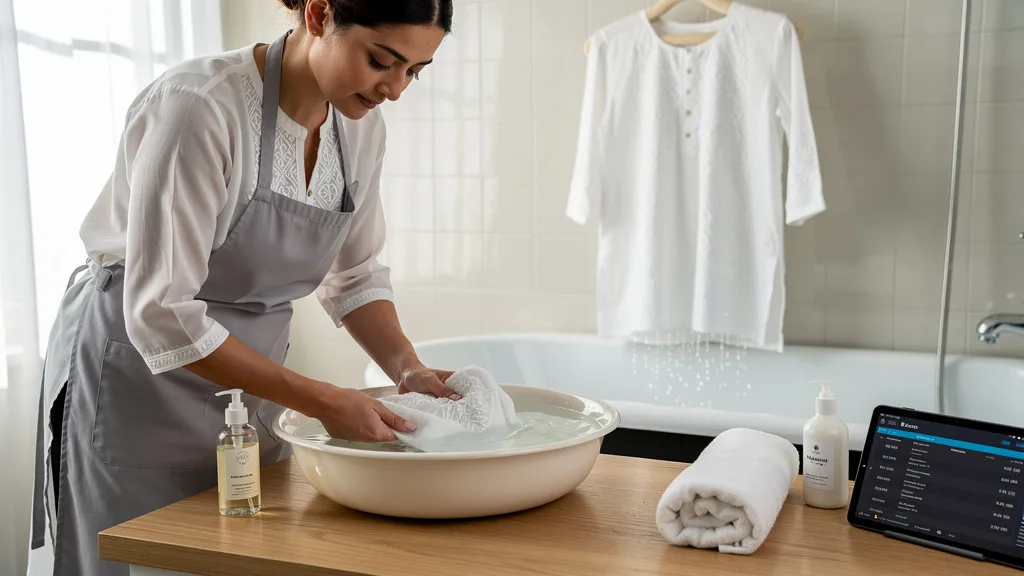
Step 1: How to Wash Chikankari Garments Correctly
The washing stage is the most critical part of the care process. The method you choose will directly impact the longevity and appearance of the delicate embroidery. While hand washing is highly recommended, machine washing is possible if done with extreme caution. Following the correct procedure is essential for preserving the beauty of your Lucknowi Chikankari.
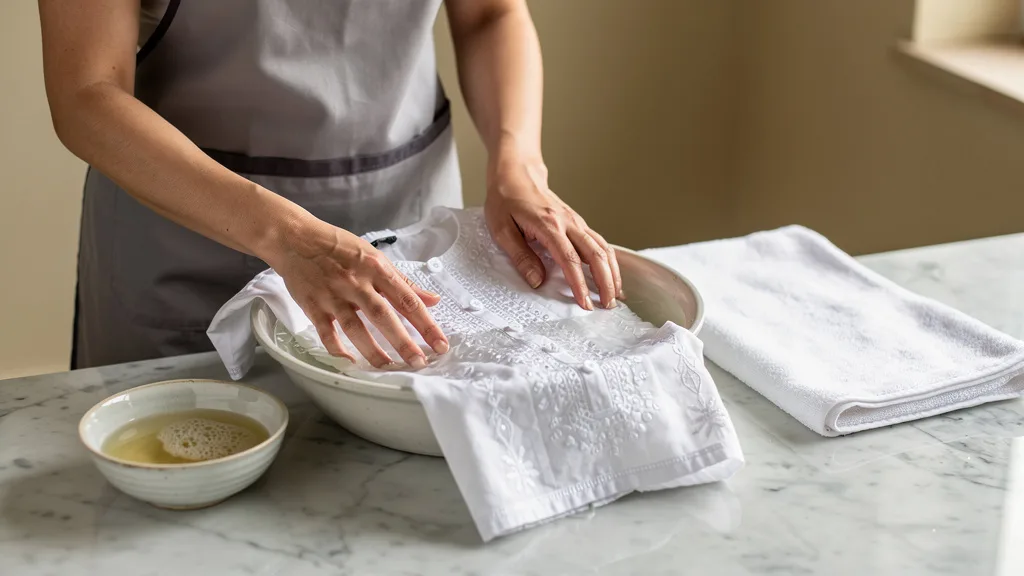
Hand Washing: The Safest Method for Delicate Embroidery
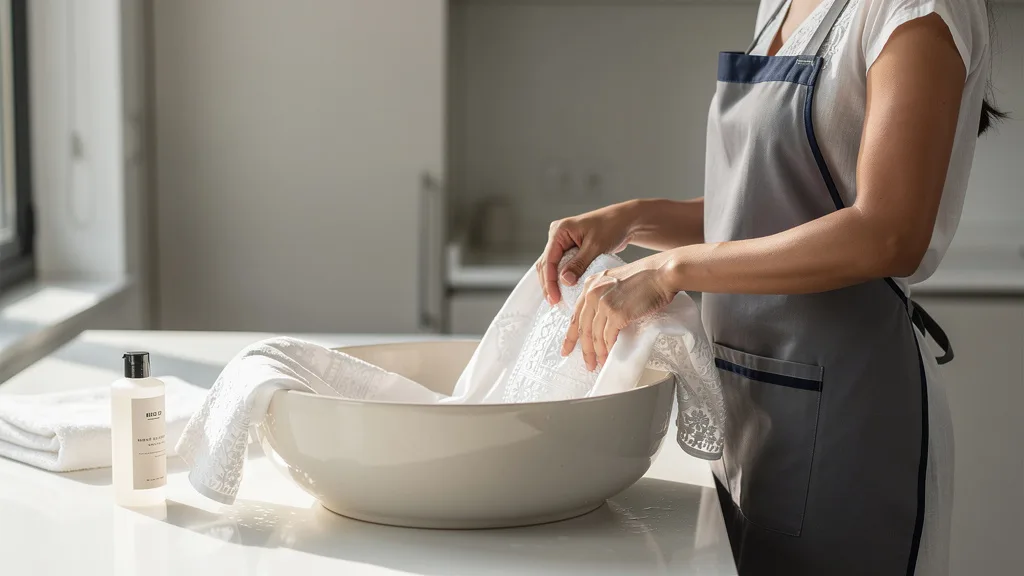
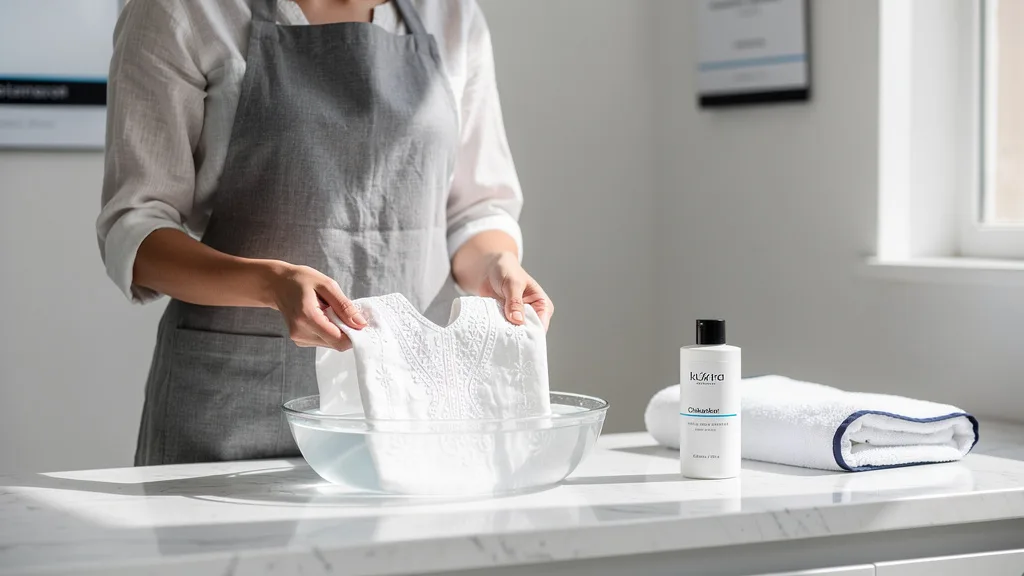
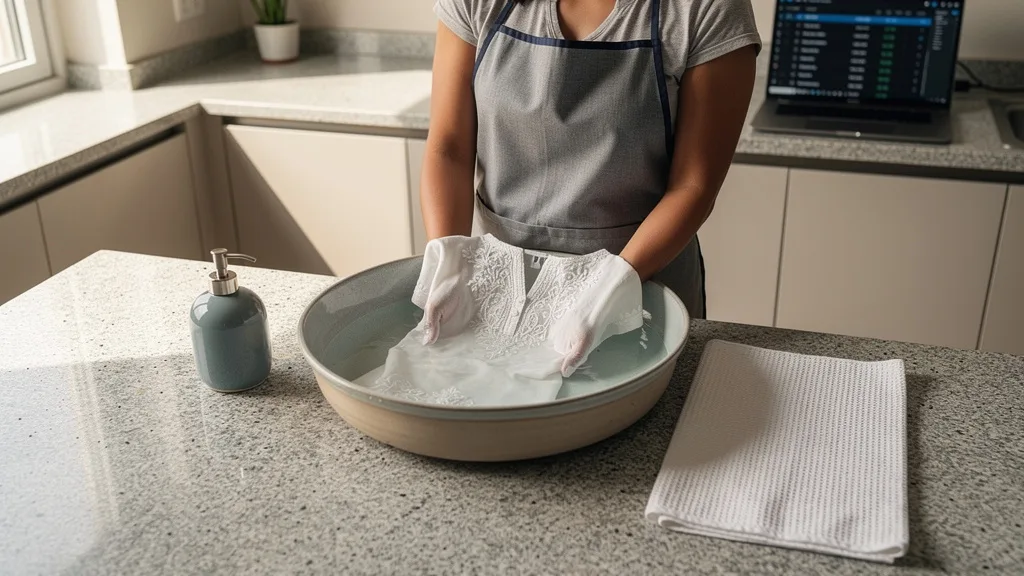
Hand washing is undoubtedly the best way to clean your Chikankari outfits. Start by filling a basin or a clean sink with cold water. Hot water can cause the fabric to shrink and may damage the delicate threads. Add a small amount of a mild liquid detergent and mix it well until it fully dissolves in the water.
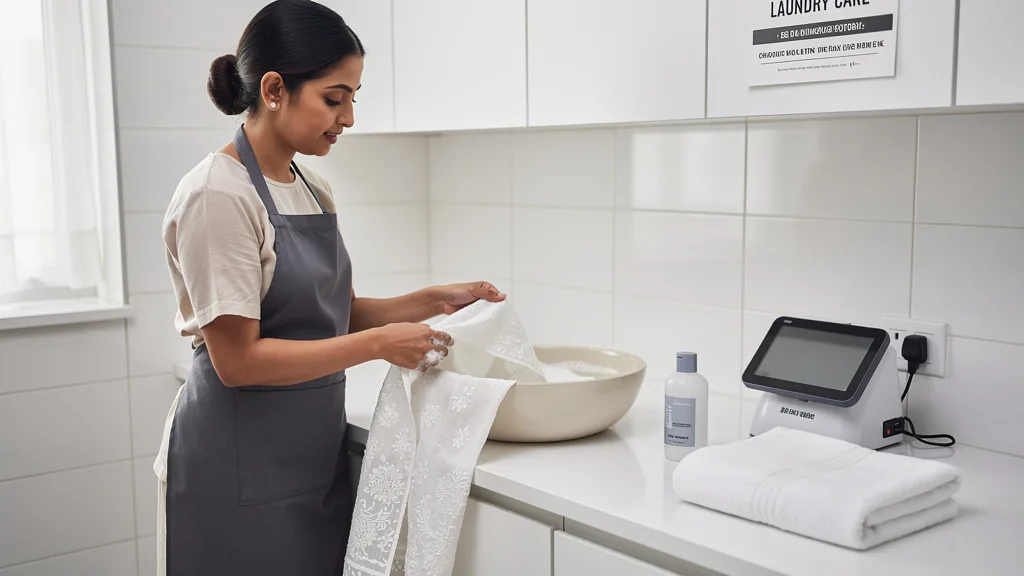
Submerge your inside-out kurta in the soapy water and let it soak for no more than 30 minutes. Gently swish the garment around in the water, but avoid any harsh rubbing, twisting, or scrubbing, especially over the embroidered areas. After soaking, drain the soapy water and rinse the kurta several times with fresh, cold water until no detergent residue remains. For more inspiration on styling, you can explore various Pakistani kurta set outfit ideas that feature delicate fabrics.
Machine Washing Guidelines for Chikankari
If you must use a washing machine, proceed with the utmost care. Place the inside-out kurta into a mesh laundry bag. This bag is crucial as it prevents the embroidery from snagging on the machine’s drum or other garments. Always use the ‘delicate’, ‘hand wash’, or ‘gentle’ cycle on your machine, and ensure the water temperature is set to cold.
Select the lowest possible spin speed to minimize stress on the fabric and threads. Using a gentle, pH-neutral detergent is just as important in a machine as it is for hand washing. Once the cycle is complete, remove the garment from the mesh bag immediately to prevent deep wrinkles from setting in. This method should be a secondary option, as even the gentlest cycle is more aggressive than hand washing.
Step 2: Drying Your Kurti to Prevent Damage
Proper drying is just as important as washing when it comes to learning how to wash and care for a Chikankari kurta at home. Never, under any circumstances, put your Chikankari garment in a machine dryer. The high heat will cause irreversible damage, leading to shrinkage of the fabric and breakage of the delicate embroidery threads.
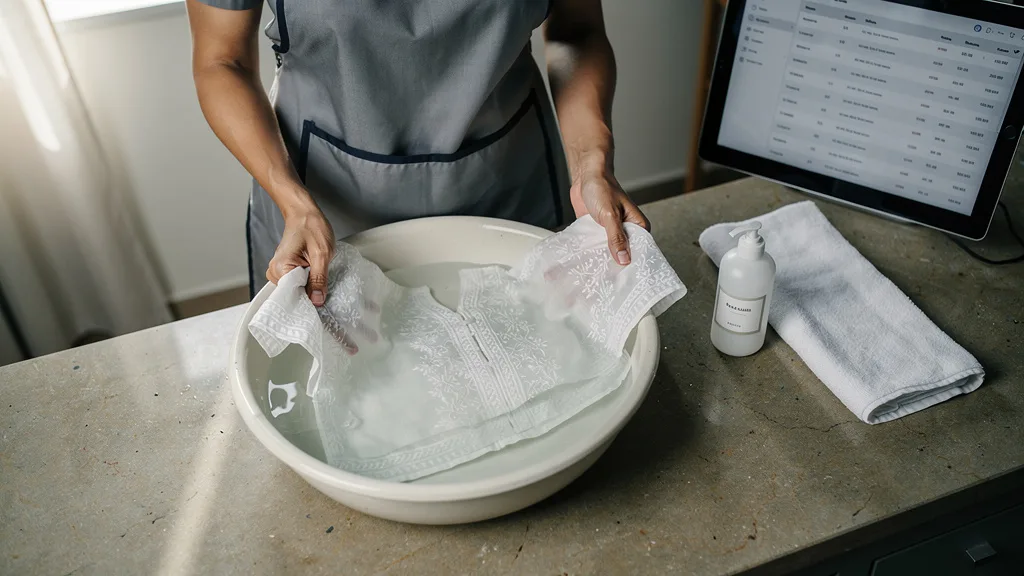
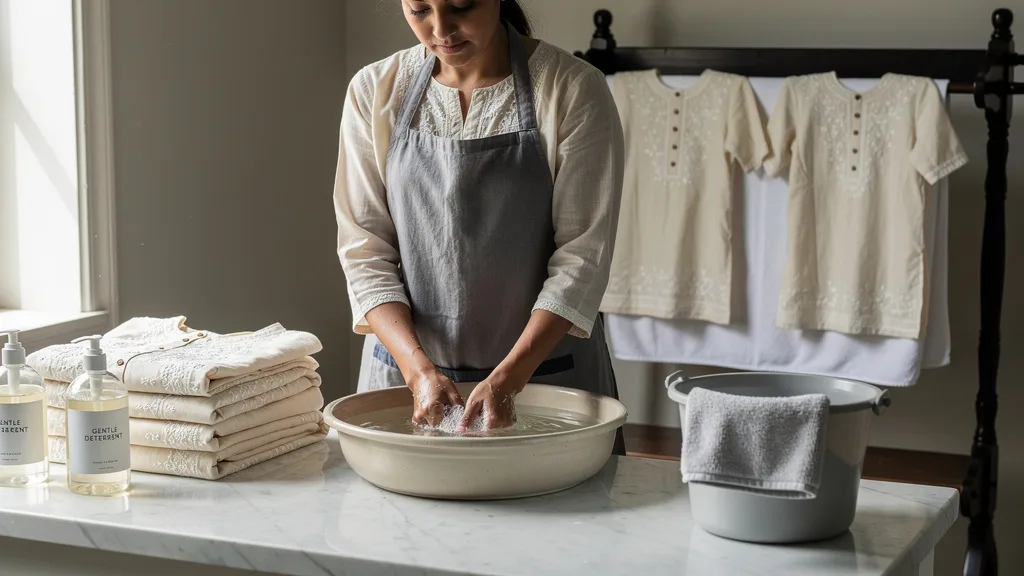
To remove excess water after washing, gently squeeze the garment without wringing it. A better method is to lay the kurta flat on a thick, clean towel, roll the towel up with the garment inside, and press gently to absorb moisture. To air dry, either lay the kurta flat on a clean, dry surface or hang it on a padded hanger. Always dry it in a well-ventilated area away from direct sunlight, as UV rays can cause colors to fade and white fabrics to yellow over time.
“The golden rule for drying any delicate embroidery like Lucknowi Chikankari is to avoid direct heat and sunlight. As of 2026, air drying in the shade remains the top best practice to preserve both the fabric’s color and the thread’s integrity for years to come.”
Step 3: Ironing and Storing Your Embroidered Pieces
The final steps in your Chikankari care routine are ironing and storage. These actions ensure your kurta looks crisp and fresh for every wear and remains in pristine condition when not in use. Mishandling at this stage can easily undo all the careful work you put into washing and drying.
Proper Ironing Techniques for Lucknowi Embroidery
To safely iron your Chikankari kurta, it is best to do so while the fabric is still slightly damp. Set your iron to a low or medium heat setting; high heat can scorch the fabric and damage the threads. The most important rule is to always iron the garment on its reverse side. This prevents the iron from flattening or snagging the raised embroidery.
For extra protection, you can place a thin cotton cloth, like a handkerchief or a piece of muslin, over the fabric before ironing. This provides an additional buffer between the iron’s hot plate and your garment. Avoid using the steam function directly on the embroidery and never spray starch on the threads, as it can cause discoloration and stiffness. Similar principles apply to other fine garments, as detailed in this beginner guide to premium shirt care.
Long-Term Storage Advice to Maintain Your Kurti
Proper storage is essential for preserving your Chikankari pieces between wears. Before storing, ensure the kurta is completely clean and dry, as any lingering moisture or stains can attract pests and lead to mildew. It is best to hang your kurtas on padded hangers to prevent the shoulders from stretching or getting misshapen.
If you prefer to fold your garments, place acid-free tissue paper between the folds to prevent creasing and protect the embroidery. Store your Chikankari outfits in a cool, dry, and dark place like a closet or wardrobe. For maximum protection, use a breathable cotton or muslin garment bag. Avoid storing them in plastic covers, which can trap moisture and cause the fabric to yellow over time. These storage tips help keep your kurta for men and women looking their best.
Common Chikankari Care Mistakes to Avoid
Even with the best intentions, common mistakes can lead to damaged embroidery or fabric. Understanding what not to do is as crucial as knowing the correct steps. Many people accidentally damage their beautiful Chikankari garments by treating them like regular clothing. The intricate handiwork requires a more delicate approach to ensure it lasts.
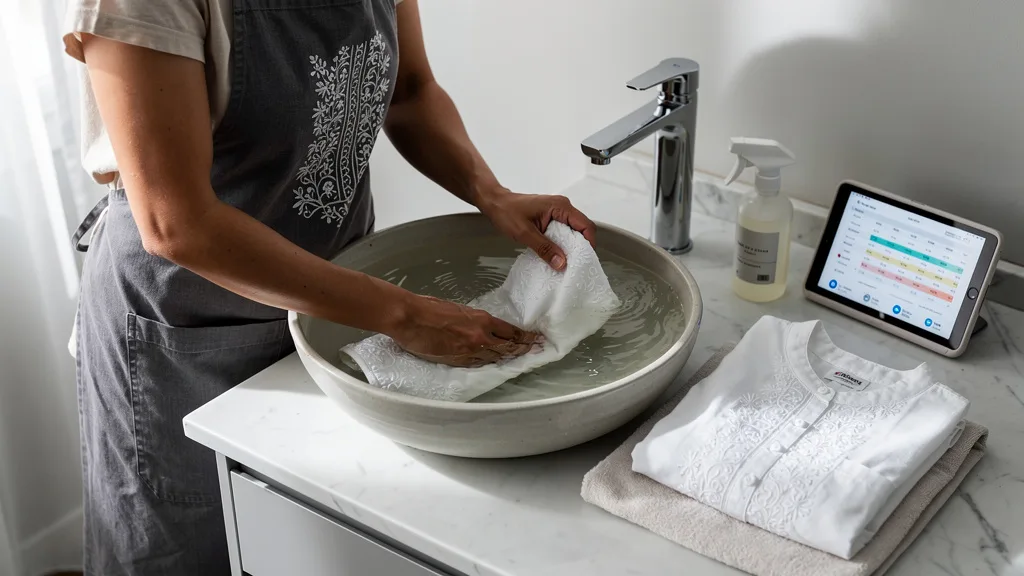
One of the most frequent errors is using harsh chemicals like bleach or strong stain removers, which can dissolve the delicate threads and discolor the fabric. Another is wringing the garment tightly to remove water, which strains and breaks the embroidery. Below is a table outlining some common mistakes and the correct alternatives to keep your pieces beautiful.
| Common Mistake | Why It’s Harmful | The Correct Method |
|---|---|---|
| Washing in Hot Water | Can cause fabric shrinkage and may damage delicate threads. | Always use cold water for both washing and rinsing. |
| Using Harsh Detergents or Bleach | Chemicals can weaken, break, or discolor the embroidery threads. | Use a small amount of a mild, pH-neutral liquid detergent. |
| Twisting or Wringing the Kurta | Stretches the fabric and can cause the embroidery to break or unravel. | Gently squeeze out excess water or roll it in a towel. |
| Drying in Direct Sunlight | Fades the fabric color and can make white garments turn yellow. | Air dry in a shaded, well-ventilated area. |
| Ironing Directly on Embroidery | Flattens the raised threads and can cause snagging or melting. | Iron on the reverse side of the garment on a low heat setting. |
Key Takeaways
Caring for your Chikankari kurta doesn’t have to be complicated. By following a few essential guidelines, you can easily maintain its beauty and craftsmanship at home. Here are the most important points to remember from this guide.
- Hand Wash Is Best: Always opt for hand washing in cold water with a mild detergent. This is the gentlest and safest method for Lucknowi embroidery.
- Avoid Harsh Treatment: Never twist, wring, or scrub the garment. Avoid bleach and harsh chemicals that can damage the delicate threads.
- Air Dry in the Shade: Skip the machine dryer completely. Roll the kurta in a towel to remove excess water and hang or lay it flat to dry away from direct sunlight.
- Iron with Care: Iron your kurta on the reverse side while it is still slightly damp. Use a low heat setting to protect the embroidery from damage.
- Store Properly: Keep your clean, dry kurta in a breathable garment bag in a cool, dark place. Use padded hangers to maintain its shape.
Frequently Asked Questions
Here are answers to some common questions about caring for and wearing Chikankari garments.
Does chikankari fabric shrink after washing?
Chikankari fabric can shrink if not washed correctly. The risk of shrinkage depends more on the base fabric (like cotton or viscose) and the water temperature than the embroidery itself. To prevent shrinking, always wash your Chikankari kurta in cold water and avoid using a hot machine dryer. Air drying is the safest option.
What is the best fabric to use for a chikankari kurta?
Chikankari embroidery is traditionally done on light, airy fabrics that are easy to work with. The best and most popular choices include muslin, voile, organza, georgette, and cotton. These materials beautifully showcase the intricate needlework and are comfortable to wear, especially in warmer climates. The choice of fabric often depends on the occasion, with silk and georgette being preferred for formal wear.
What should you wear under a chikankari kurti?
Since many fabrics used for Chikankari, such as georgette or muslin, are semi-sheer, wearing something underneath is recommended. A seamless slip or a camisole that matches your skin tone or the color of the kurti is an ideal choice. This provides modesty without detracting from the beauty of the embroidery. You can find more styling tips for a short kurta for women in our style guide.
How do you remove a stain from a chikankari garment?
To remove a stain, act quickly. Gently blot the affected area with a clean cloth to absorb as much of the spill as possible; do not rub, as this can spread the stain. For minor stains, you can try dabbing the area with a cloth dipped in cold water and a drop of mild detergent. For tougher or oil-based stains, it is safest to consult a professional dry cleaner who specializes in delicate fabrics.
Can you use fabric softener on chikankari outfits?
It is best to avoid using fabric softener on your Chikankari garments. Fabric softeners can leave a chemical residue on the embroidery threads, which may dull their natural sheen and attract dirt over time. In some cases, these chemicals can also weaken the delicate threads, compromising the integrity of the handiwork. Sticking to a mild detergent and cold water is sufficient to keep the fabric soft.
Conclusion
Properly caring for your Chikankari kurta is an act of preserving a beautiful piece of wearable art. By following the simple steps outlined in this guide, you can confidently wash, dry, and store your garments without fear of damaging the intricate embroidered Chikankari. The key is to always be gentle, avoid harsh chemicals and high heat, and treat each piece with the attention it deserves.
The main takeaways are straightforward: hand washing in cold water is the gold standard, air drying in the shade is non-negotiable, and ironing on the reverse side is essential. Committing to this routine ensures that your Chikankari kurtas will maintain their elegance, color, and structural integrity, allowing you to enjoy their timeless appeal for many seasons to come.
Ready to add another timeless piece to your collection? Our curated selection of premium Chikankari kurtas combines traditional artistry with modern style, crafted from the finest fabrics. Explore our collection today and find your next favorite outfit. SHOP NOW.